

India's demographic dividend, with a median age of 28 years, is one of its biggest attractions for investors. We are decades younger than ageing economies like Japan, China, and much of Europe. This demographic advantage is one of the reasons (among many) that India's healthcare spending remains at around 3.5% of GDP, compared with well over 10% across much of Europe/UK, and 16% in the US (source). This same age advantage also keeps India's cancer burden relatively low today, as cancer risk rises sharply with age. India sits near the bottom of the incidence curve alongside Nigeria and Egypt, while the US, UK, and much of Europe report incidence rates two to three times higher, giving India a favourable starting point.
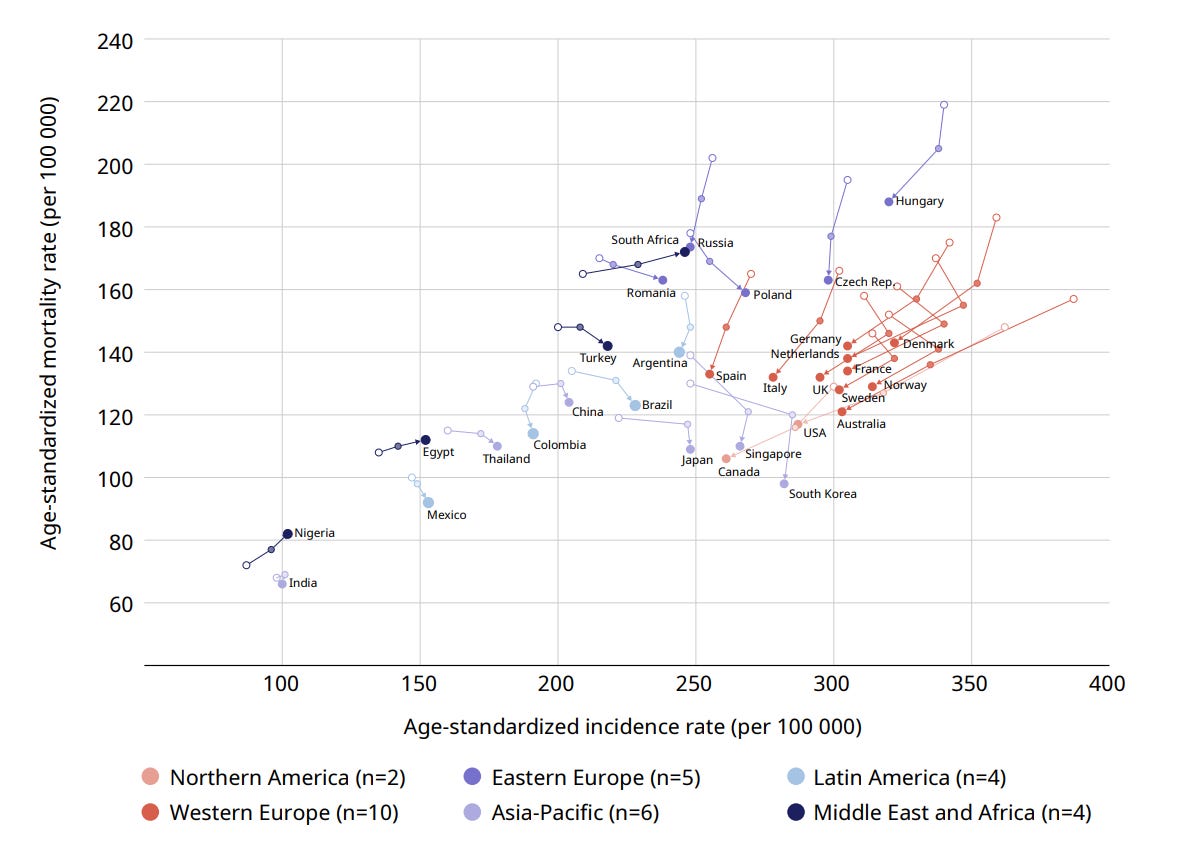
The good news ends there. If you read through the data of top 10 hospitals in India, Oncology (branch of medicine dedicated to the prevention, diagnosis, and treatment of cancer) is amongst the busiest and most revenue generating even today. As India's median age rises towards the 35–40 age bracket, the incidence of cancer and other non-communicable diseases is expected to increase materially. Over time, this demographic shift is likely to push healthcare spending higher as a share of GDP, with ageing unfolding at a much faster pace than it did in most developed economies.
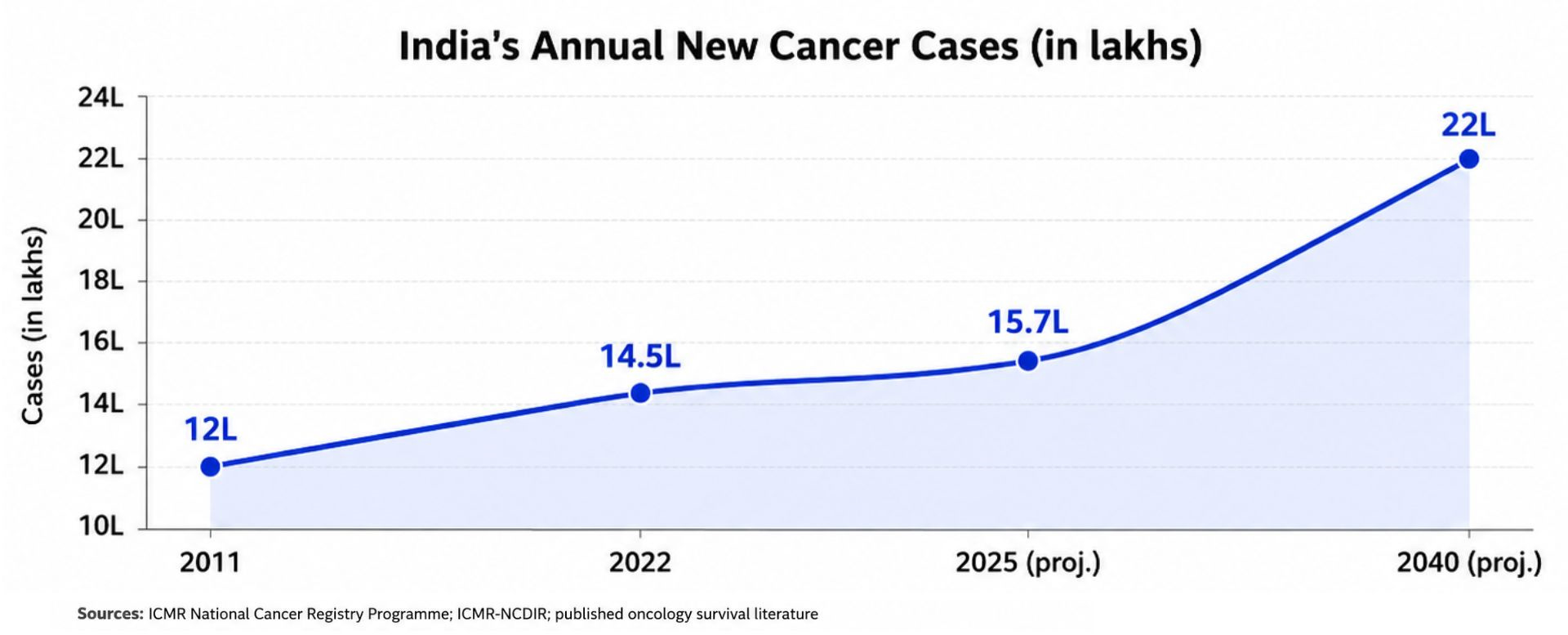
One in 10 Indians faces the risk of developing cancer before the age of 75. According to estimates presented in the WHO Global Status Report on Cancer 2026, India had ~1.6 Mn new cancer cases in 2024, with around 900,000 deaths. Experts now project that annual new cases could climb to 2.2 Mn by 2040 & 2.8 Mn by 2050, driven by population growth, ageing and changing lifestyles. The chart below shows how annual addition in cancer cases is about to double in next 15 years vs where it was 15 years ago in 2011.
India still has time on its side, but that window will not stay open forever. The country has a unique opportunity to build the prevention, screening, diagnostics, and treatment infrastructure needed before the cancer burden accelerates. If India gets this decade right, it can prepare its healthcare system before ageing turns today's manageable challenge into tomorrow's crisis.
How do you treat cancer?
For decades, cancer treatment has relied on three pillars of treatment:
Surgery removes tumours before they spread, making it most effective when cancer is detected early. But tumour cells can develop again if those cells go undetected.
Chemotherapy uses drugs to kill rapidly dividing cells, but because it cannot always distinguish cancer cells from healthy ones, side effects like hair loss, nausea, and fatigue are common.
Radiation therapy uses high-energy rays to destroy cancer cells in a targeted area, though nearby healthy tissue can also be affected.
While these treatments have saved millions of lives and continue to form the backbone of cancer care, over the last 10-15 years, targeted therapies and immunotherapy have transformed treatment by enabling the immune system to recognize and eliminate cancer. CAR-T therapy represents one of the most advanced examples of this shift.
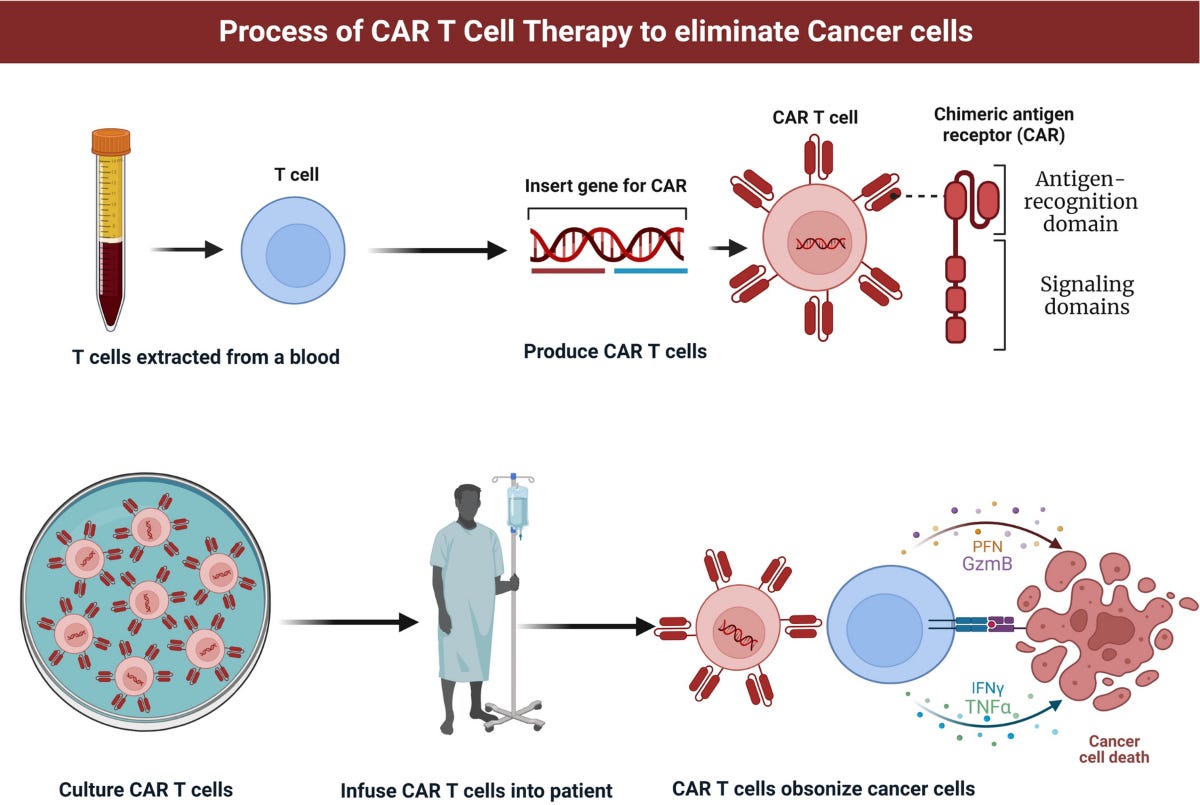
Unlike conventional treatments, CAR-T is typically reserved for patients with relapsed or refractory blood cancers after standard options such as chemotherapy, and bone-marrow transplant have failed. Until recently, many Indian patients had to travel abroad, most often to the US, to access this therapy. The treatment involves extracting a patient's own T cells, genetically engineering them with a Chimeric Antigen Receptor (CAR) to recognize cancer cells, and infusing them back into the body. Unlike chemotherapy, which acts like a blunt instrument, CAR-T functions more like a guided missile, selectively hunting down cancer cells while largely sparing healthy tissue. For blood cancers such as leukemia and lymphoma, this shift from attacking the body to empowering the immune system has opened an entirely new chapter in cancer treatment.
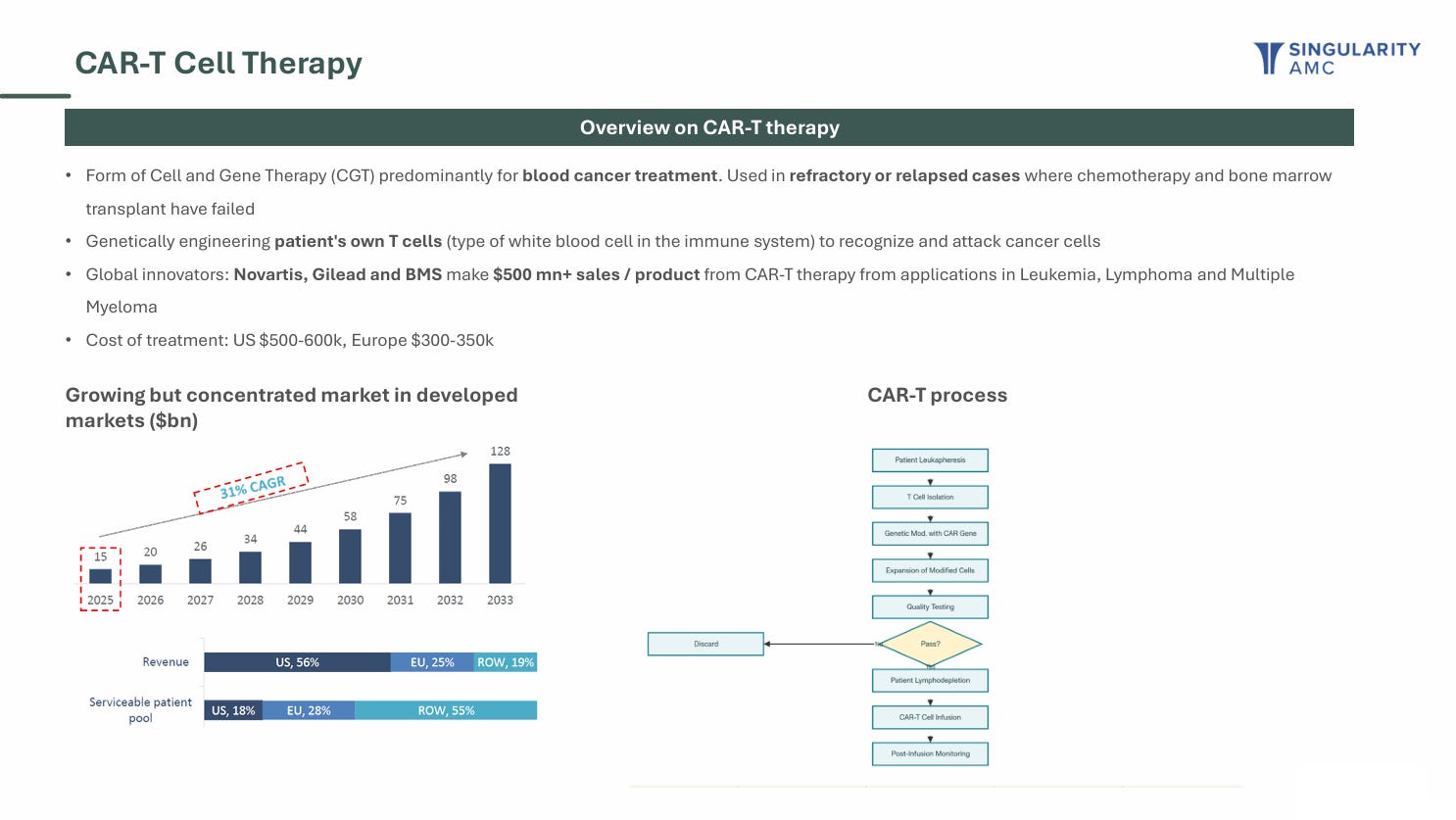
It sounds almost too precise to be real, and is globally priced like it too. In the US, a single course of CAR-T treatment costs $500,000 to $600,000. In Europe, it is $300,000 to $350,000. Global giants like Novartis, Gilead and Bristol Myers Squibb have each built $500 Mn plus product franchises around it, largely in leukemia, lymphoma and multiple myeloma. The global CAR-T market was worth about ~$15 Bn in 2025 and could grow at a 31% CAGR to $128 Bn by 2033. That growth is still heavily concentrated in developed markets. The US alone accounts for 56% of global revenue today, despite holding only 18% of the serviceable patient pool worldwide. Europe adds another 25% of revenue against 28% of the patient pool. The rest of the world, 55% of eligible patients, generates just 19% of revenue.
The price barrier is one of key challenge in wide scale adoption of this technology.
Enter Immuneel
Building a company in cell and gene therapy requires far more than scientific breakthroughs. It demands deep expertise across research, clinical oncology, manufacturing, regulation, commercialization, and capital allocation. Immuneel has brought together leaders from each of these disciplines, giving the company one of the most experienced leadership teams in India's emerging CAR-T ecosystem.
One of Immuneel's biggest strengths lies in its leadership bench, which combines expertise across biotechnology, clinical oncology, translational research, venture investing, and commercialization. The company is co-founded by Kiran Mazumdar-Shaw, one of India's foremost biotech entrepreneurs, alongside globally recognized cancer physician-scientist Dr. Siddhartha Mukherjee and healthcare investor Dr. Kush Parmar. The leadership is further complemented by CEO Amit Mookim's experience in scaling healthcare businesses and Dr. Lakshmikanth Gandikota's deep expertise in biologics and cell & gene therapy development. Together, the team brings a rare combination of scientific depth, clinical insight, manufacturing experience, and commercial execution, capabilities that are critical for building a complex platform like CAR-T therapy.
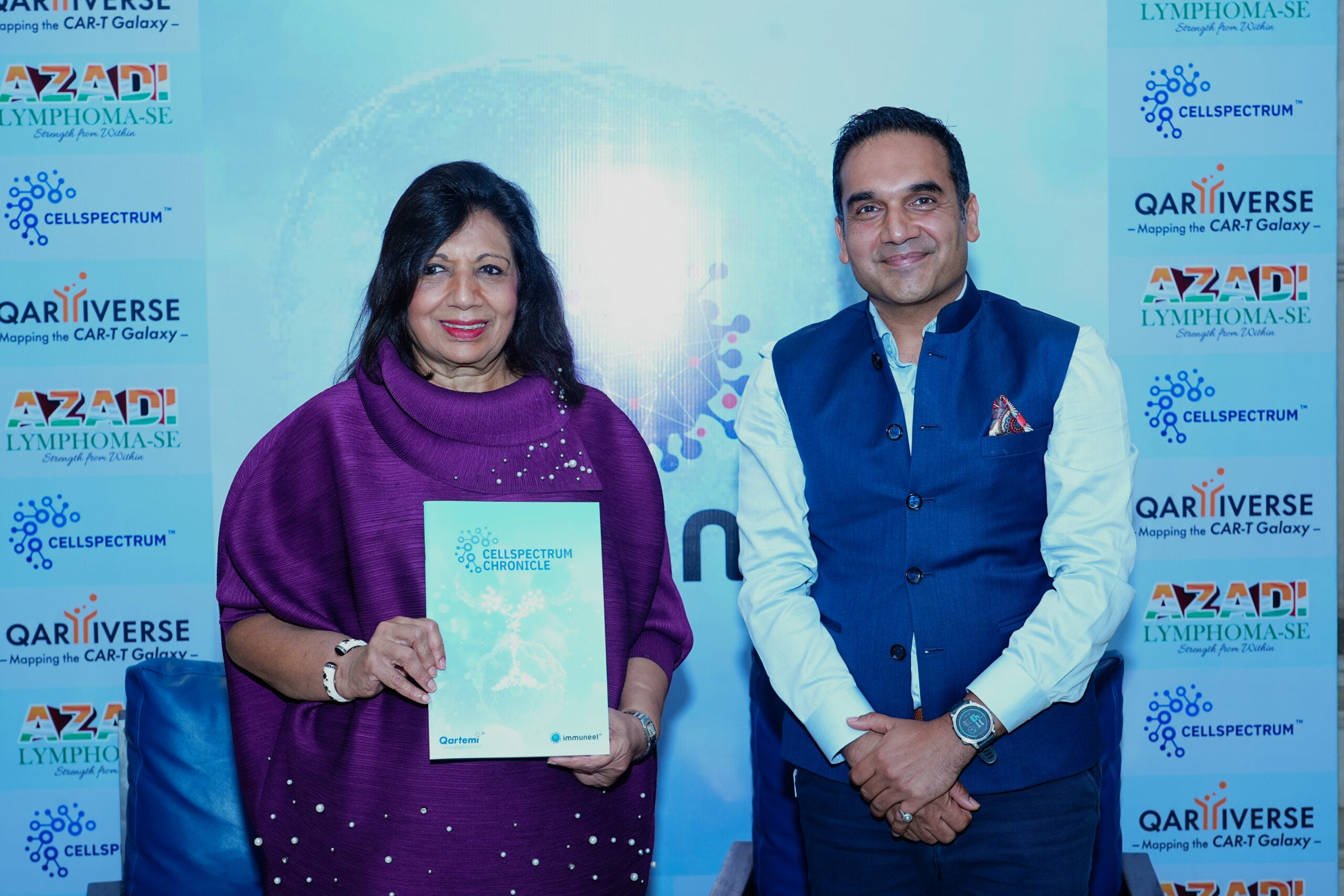
Developing a CAR-T therapy is not a sprint, and Immuneel’s journey reflects just how long and complex the process can be. Founded in 2020, the company spent nearly five years moving from research to commercialization. Its first CAR-T therapy for Non-Hodgkin’s Lymphoma received regulatory approval in October 2024 and was commercially launched in January 2025. Reaching that milestone required far more than successful clinical trials. Alongside conducting Phase 1 & Phase 2 studies in India, Immuneel also had to navigate the added complexity of in-licensing its core CAR-T technology from a premier Spanish research institute, bringing both scientific validation and additional regulatory requirements. What makes this particularly interesting from an India perspective is the pricing. This therapy costs ~Rs 40 to 50 lacs to a patient, which is roughly one-tenth the cost of comparable CAR-T therapies in the US, while delivering clinically comparable outcomes and maintaining global quality standards.
While Immuneel has already empanelled over 50 leading hospitals across India, CAR-T therapy requires specialized bone marrow transplant infrastructure and highly trained clinical teams, naturally limiting how quickly the treatment network can expand.
As the journey continues, its next indication, Acute Lymphoblastic Leukemia (ALL) for pediatric and adult patients, is currently progressing through clinical trials and regulatory review, with approvals expected in the coming months. This is typical of the CAR-T industry. Given the high cost of development, rigorous clinical requirements, and the challenge of scaling personalized manufacturing, companies generally expand one indication at a time rather than attempting multiple approvals simultaneously.
Not the only Indian player
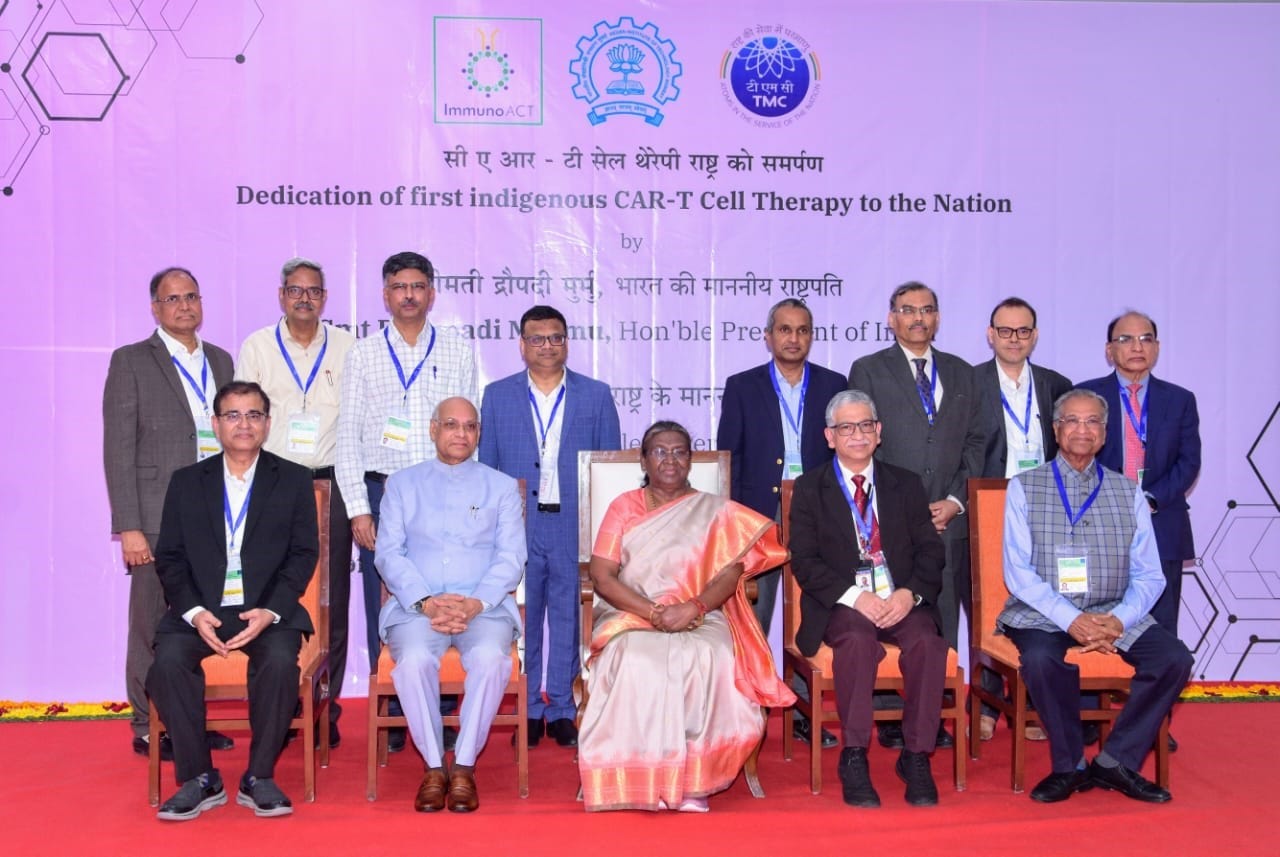
Immuneel is not alone in this journey. ImmunoACT, a venture founded in 2018 through a collaboration between IIT Bombay and Tata Memorial Hospital and backed by Laurus Labs, also pioneered indigenous CAR-T therapy in India. The company's efforts culminated in April 2024 with the launch of NexCAR19, India's first home-grown CAR-T cell therapy, dedicated to the nation by President Droupadi Murmu.
ImmunoACT built its technology stack in-house, including domestic viral vector manufacturing, allowing it to compete aggressively on price. Immuneel took a different route, licensing proven CAR-T technology from a global partner to prioritize clinical outcomes. But at the end of the day, both companies are working toward the same outcome: making CAR-T therapy affordable enough to move beyond a niche treatment and become a realistic option for thousands more patients.
Where Does CAR-T Go From Here?
CAR-T therapy has been most successful in blood cancers, where cancer cells circulate through the blood and bone marrow, making them easier for engineered T cells to target. Solid tumors are much harder. They form dense masses surrounded by a protective microenvironment that prevents CAR-T cells from reaching, surviving, and effectively destroying the cancer. Even when they get there, the tumor can suppress or exhaust them before they complete the job.
Solid tumors account for nearly 90% of cancer diagnoses worldwide.
Recent clinical trials have shown encouraging results in brain, gastric, liver, sarcoma, neuroblastoma, and several other solid tumors. Brain cancers, once considered among the hardest to treat, have emerged as one of the most promising areas for CAR-T therapy.
Beyond solid tumors, even for early cases of blood cancers, researchers are exploring whether CAR-T can move from a last-resort treatment after chemotherapy and relapse to a much earlier line of therapy, when patients are healthier and outcomes may be better. At the same time, CAR-T is emerging as a promising approach for autoimmune diseases such as lupus, where engineered T cells can eliminate the immune cells driving the disease, potentially resetting the immune system and inducing deep remission.
Preparing for an Older India
India's cancer burden remains lower than that of most developed economies, giving the country something few nations had: time. Whether that advantage translates into better outcomes will depend on the investments made today in research, manufacturing, clinical infrastructure, and innovation. If India gets this transition right, companies like Immuneel may not just transform cancer care at home, but help position the country as a global leader in advanced cell and gene therapies.
At Singularity, we are here to back that possibility and the entrepreneurs building it.
Hi sir is there any listed company to study