

EVs and the energy transition have been a consistent theme in Singularity's portfolio. We have been investing across the EV value chain for a while now, from vehicle OEMs to the materials and infrastructure that support them. On the OEM side, we backed PMI Electro Mobility and Qucev in electric buses and commercial vehicles respectively. On the materials side, we invested in HEG for graphite anodes and battery energy storage, and in Lohum for ciritcal minerals processing and lithium-ion battery recycling. The common thread across these bets is a belief that India's EV transition will play out differently across vehicle categories, and that there is real opportunity in picking the right segment rather than just the EV theme broadly.
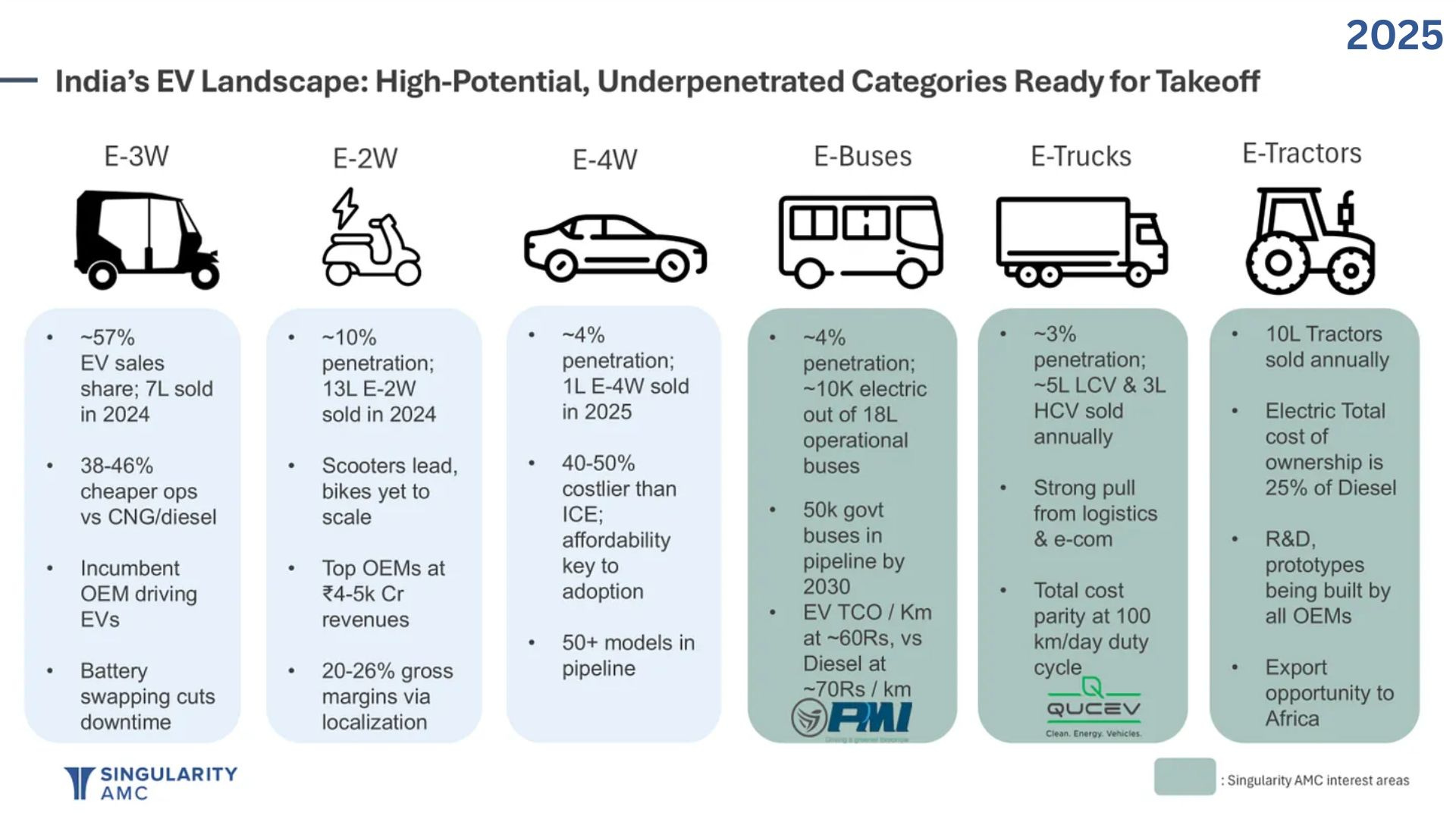
Within EVs, the categories that stood out for us early-on were the high-utilization commercial EVs, e-buses, e-trucks, and e-tractors, where brand & distribution matter relatively less, the total cost of ownership case has been clearly established, and challengers are winning market share quickly. We believed that for growth-stage investors like us, this is where the real opportunity for new OEMs lay, and it is why we backed Olectra and PMI in e-buses and Qucev in electric trucks.
Here is a snapshot of our EV thesis from 2025:
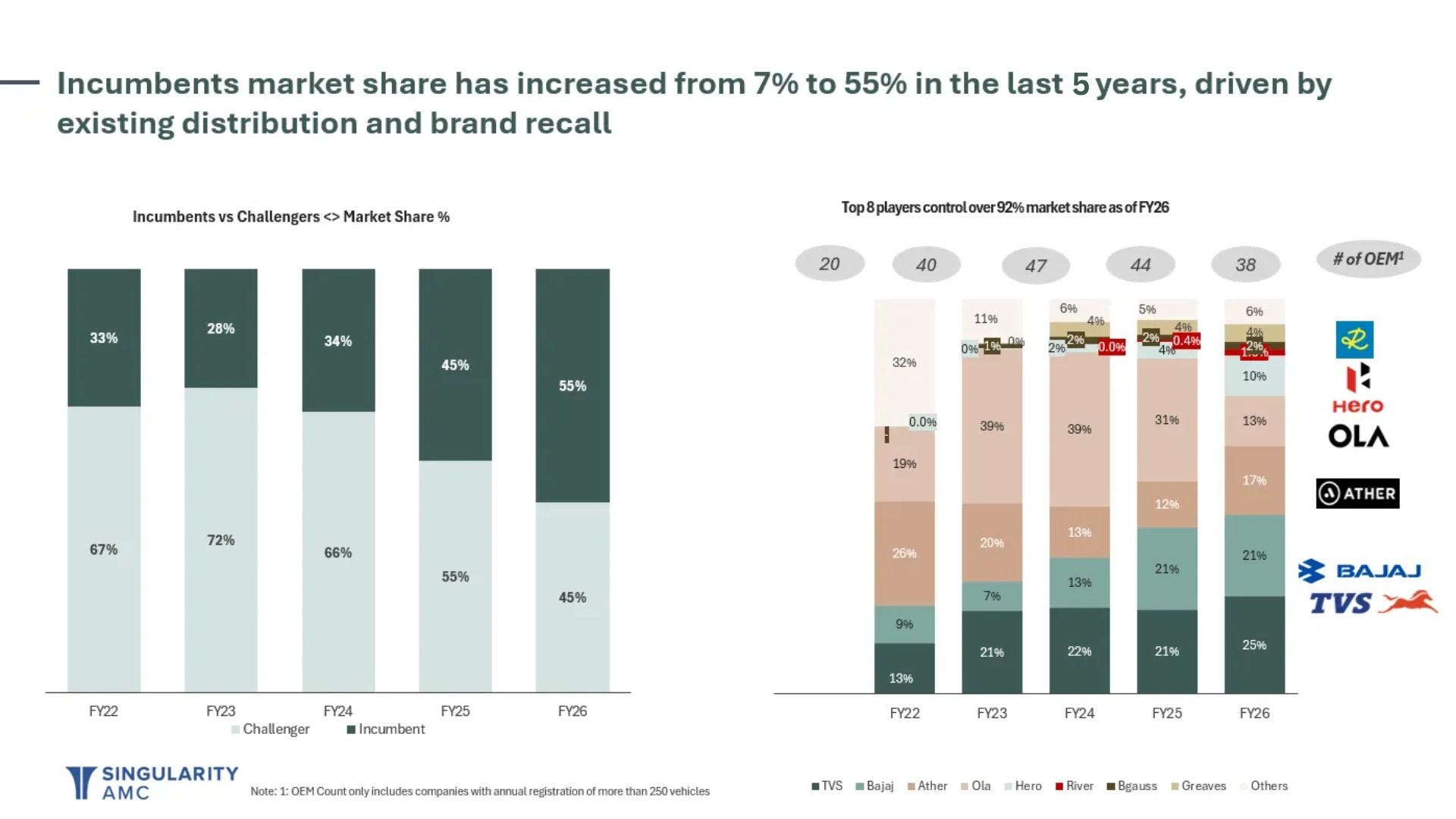
Specifically within 2W, the market data at the time did not favour a challenger OEM. Incumbent market share had climbed steadily, from 33% in FY22 to 55% in FY26. Incumbents in 2W EV carry advantages that are difficult for a new entrant to replicate quickly, an existing dealer and service network built over decades, brand recall from their ICE businesses, and stronger financing relationships that make it easier for buyers to get a loan approved. Consistent with our stated thesis that E-CV categories offered better odds for new entrants than a consolidating e-2W market, we passed River Mobility when we first evaluated it in October 2025.
But as they say, great founders don't just execute against an existing market opportunity, they reshape how you think about the market itself. The most compelling investments are often the ones where the founder execution forces you to relook at your hypothesis.
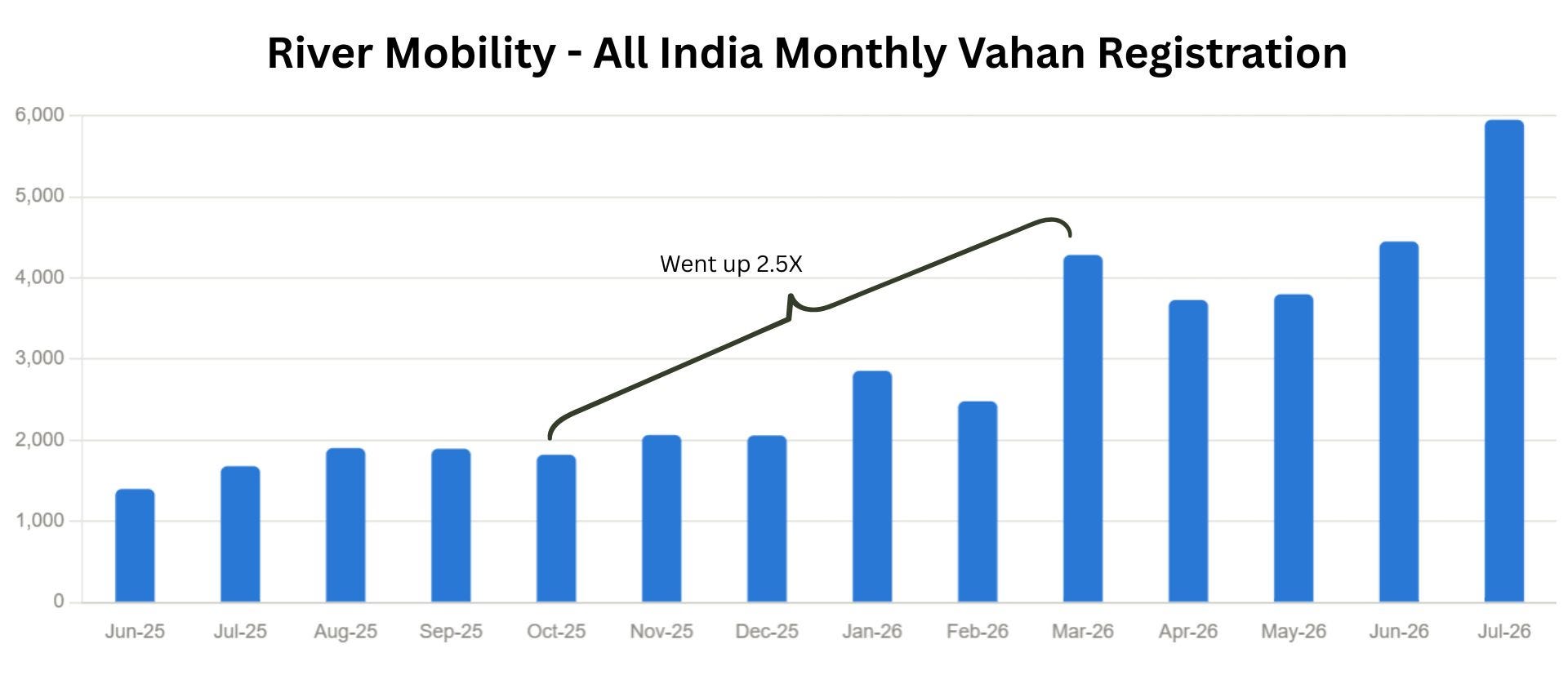
What made us revisit River Mobility was a pattern we started noticing in the months that followed. River's monthly Vahan registrations, which had hovered around 1,800 to 2,000 units through October 2025, went up 2.5X by March 2026, and continued climbing to nearly 6,000 units by July 2026. What surprised us was not just the pace of this growth but the quality behind it. River had scaled its dealership network from roughly 20 stores in March 2025 to over 73 stores today, a more than 3.5X expansion in little over a year. This was not registration growth propped up by discounting or channel stuffing but being built on the back of a solid first product, priced at a premium to the incumbents, genuine distribution expansion, the same lever that had given incumbents their edge in the first place.
As we began our diligence through channel checks and expert calls, the consistency of the feedback surprised us. Dealer after dealer spoke of River’s product quality and the level of support they received from the company, often describing River as more hands-on than most EV startups they had worked with. One dealer summed it up simply, calling River “better than most EV startups I have dealt with.”
“Good products bring customers through the door. Good companies make dealers want to open a second store. River has done both.” - From our dealer interactions
Several existing partners had gone on to open additional stores, including marquee dealer groups such as Indel Corporation, RAAM Group, a sign of confidence that is hard to fake.
The feedback was not limited to River’s own network. Even experts at competing OEMs pointed to River’s product DNA and the focused execution of its management as standout traits in a space where both are often in short supply. In most diligence processes, channel checks surface cracks that weaken conviction. Here, they did the opposite. The consistency of what we heard, from dealers and competitors alike, only strengthened our belief in the business.
Crossing the 10% Hurdle
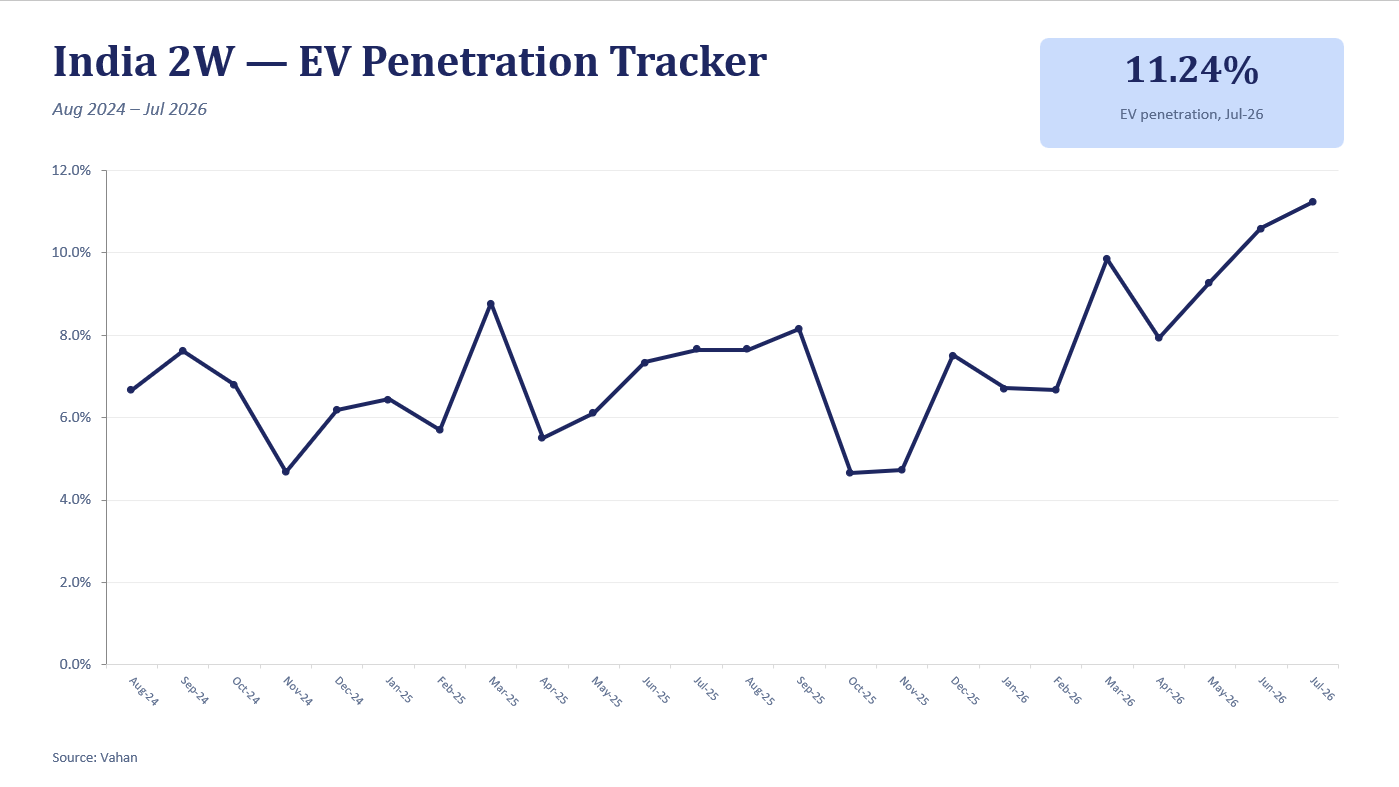
Another key element of our thesis was that fact that the EV penetration in 2W was not able to cross the 10% mark sustainably.
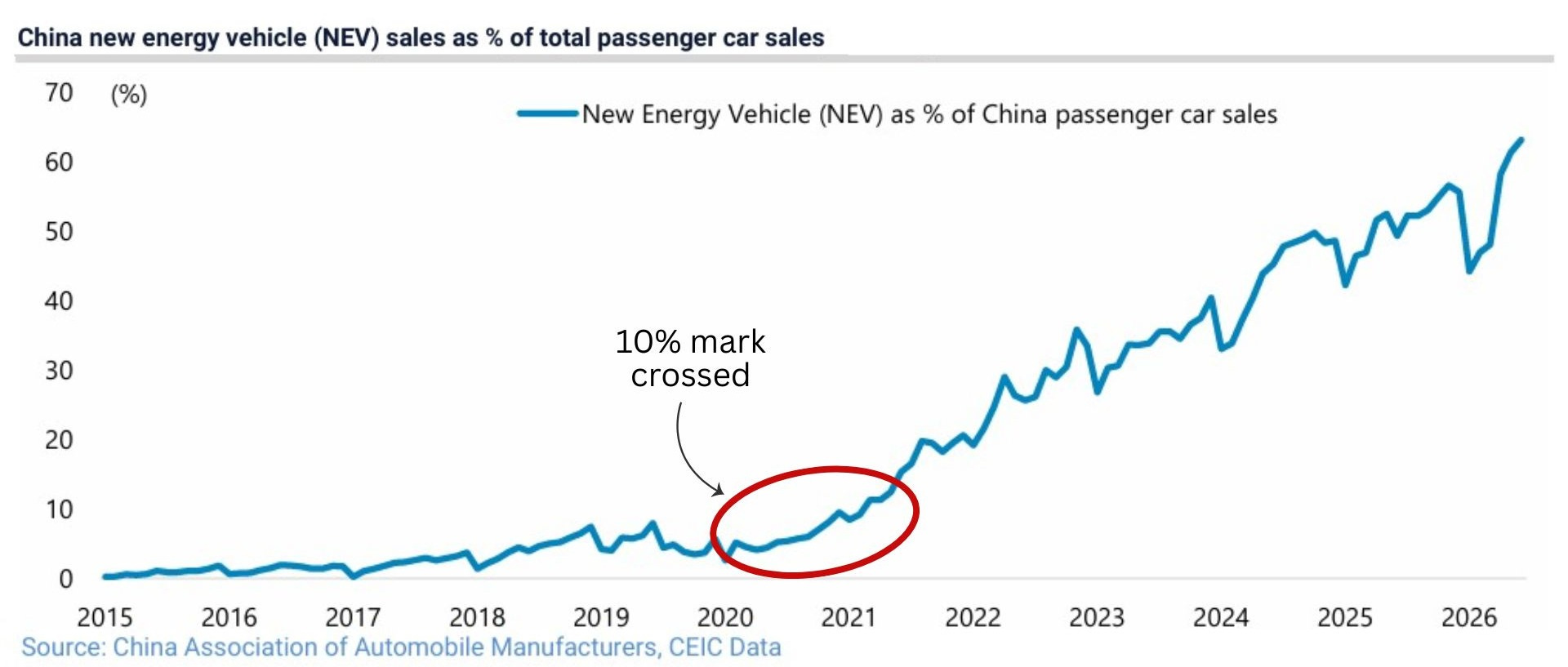
A useful parallel is China. Until 2020, EV penetration struggled to sustainably cross the 10% mark in 4W despite years of generous government subsidies. Much of the early demand came from fleets, taxis and government procurement rather than private consumers. The real inflection came after 2020. Even as subsidies were phased out by the end of 2022, the market continued to accelerate, driven by falling battery costs, intense competition from domestic players like BYD, rapid product improvements, and most importantly, growing consumer confidence in EVs as their first choice. Once that consumer mindset shifted, adoption moved beyond policy support and became self-sustaining. Today, EV penetration has reached 63% in just five years, and the fossil fuel displaced by EVs in China in H1 2026 was equivalent to 6% of the country’s total crude imports in 2025 (about 579 million tonnes).
While China is world’s largest 4W market, India is world’s largest 2W market. And what Covid did to China’s consumer mindset, the ongoing geopolitical landscape & its impact on energy security/crude oil, is bringing that similar shift in consumer mindset in our country as well.
Therefore while we have witnessed 2W EV sales spikes up few months inbetween, but we have now started witnessing in recent months of 2026 that the penetration has remained above 10% mark. Infact, electric scooter penetration is even higher within 2W with every fourth scooter being electric today (scooters are 40% market of 2W). As companies in this space come up with EV bike options soon, this 10% should go much higher.
Infact, Ather Energy which produced ~30K e-2Ws in June month, is reportedly facing a backlog of massive 150K pre-orders! Their dealer inventory has come down from 14 days to just 3 days’ worth of stock in Q1 of FY27.
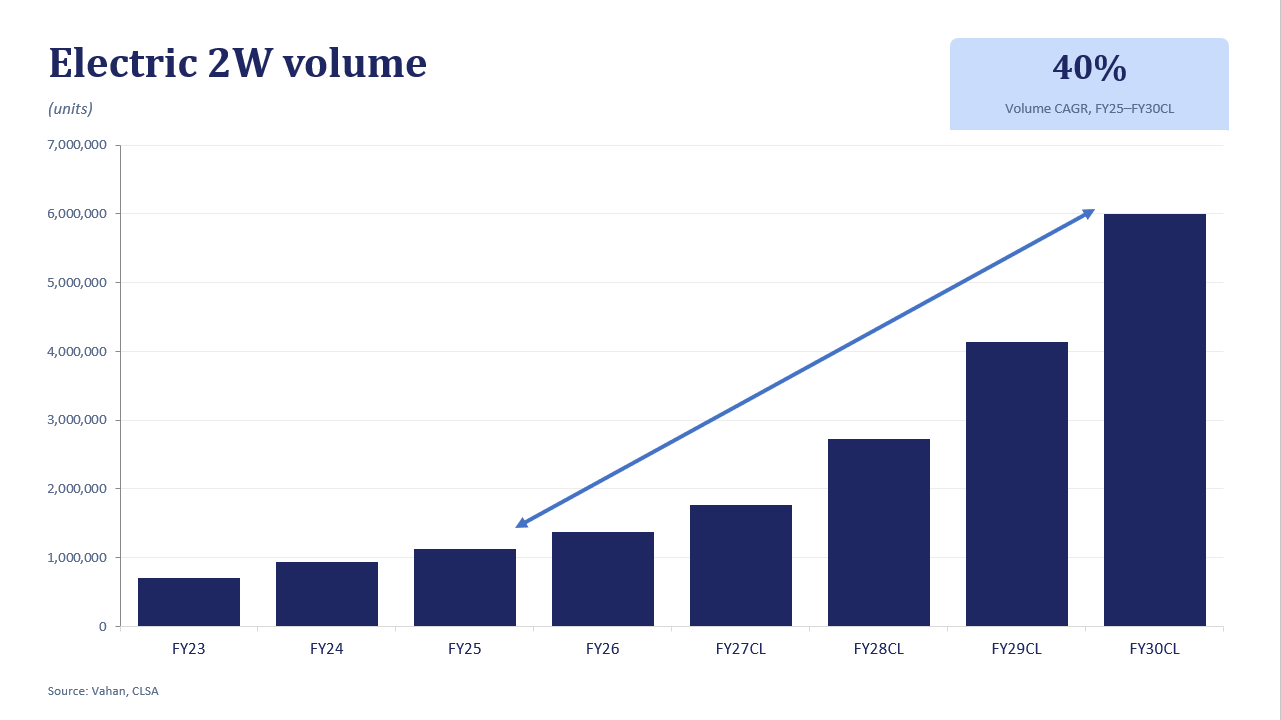
We therefore believe we stand at a pivot point from where India’s mass EV adoption starting with 2W is here, similar to how it played out in India. CLSA also estimates that India’s electric two-wheeler market will compound at roughly 40% annually over the next several years, with absolute volumes expected to grow from around 1.1 Mn units in FY25 to over ~6 Mn units by FY30 which would represent a near six-fold expansion in five years, taking e-2W from a nascent segment to one of the largest electric vehicle categories in the world by volume.
While battery cells & chips which go inside these vehicles remain key vulnerability for us till our ecosystem develops, hopefully India will become self-reliant in both over time and as a fund we aspire to accelerate in that direction via our investments as mentioned at the start.
Creating SUV of Scooters
River Mobility is attempting to building “SUV of scooters” - a utility-focused product centred on practicality, storage, stability, and everyday usability.
It was founded in March 2021 by Aravind Mani and Vipin George, both engineers with a background in industrial design and deep-tech product development. The company spent its first 27 months entirely in stealth, making no public announcements while it engineered its product, built its factory, and validated its supply chain. The starting insight was a gap in the market: existing electric scooter offerings in India were either stylish commuter vehicles with limited utility capabilities, or bare-bone utility vehicles, and neither served the growing cohort of young, urban, multi-hustle workers who needed both form and function from their two-wheeler.
The answer was the Indie, a scooter designed around utility first. It offers an unprecedented amount of storage space as well as lock-and-load pannier-stays on the sides that allow an array of customisations to serve different purposes. The design philosophy is rider-first and uncompromising. River is the only Indian two-wheeler brand to have won Red Dot awards in both Concept Design and Product Design categories, in consecutive years, 2024 and 2025, with the Indie selected for its functional design that combines variable transport solutions, protective features, and everyday practicality.
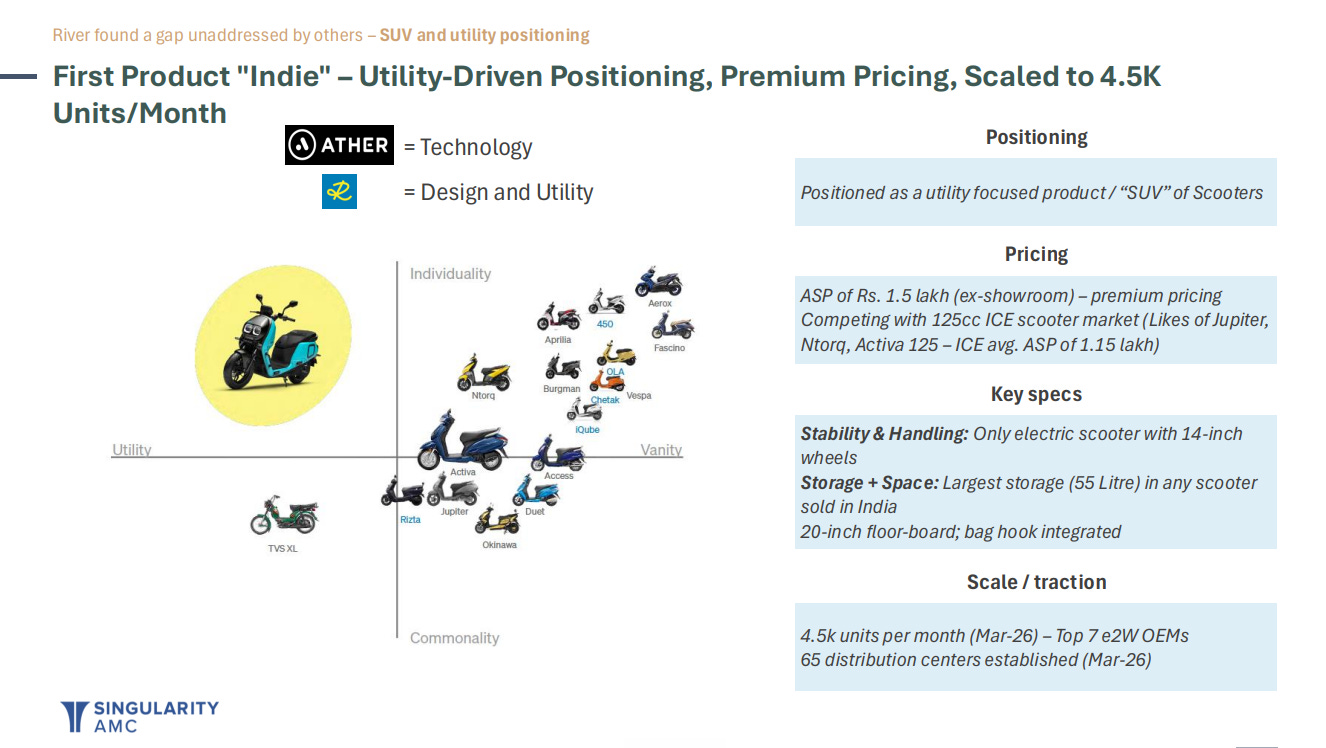
And Indie’s market performance as a single-product company makes the story quite interesting. From roughly 20 units a day when deliveries began in late 2023, River has scaled to nearly 200 units a day today, crossing 6,000 to 7,000 monthly registrations across ~73 outlets spanning 38 cities. Most two-wheeler companies at this stage are either discounting aggressively to chase volume or spreading themselves thin across multiple products. River has done neither.
River designs and controls its own battery packs, BMS, vehicle control unit, and the full hardware-software stack that defines how the scooter rides, its range, and efficiency. The manufacturing facility in Hoskote, Karnataka spans 120,000 square feet with automated battery pack and vehicle assembly lines, and has a production capacity of 100,000 units per annum.
Laddering, Not Down-Trading
Brand positioning for a customer determines your long term success.
While most electric two-wheeler companies began by chasing the largest sub-₹1 lakh segment, Ather chose the opposite route. It started at the premium end of the market, focusing on performance, technology, software, and charging infrastructure instead of volumes. Their first product ‘450S’ was a premium tech-led performance scooter for many initial years. This helped establish Ather as one of the few aspirational brands in the Indian EV ecosystem, even though it meant sacrificing market share in the early years.
“I’ve never seen a hardware founder who died because they priced themselves too high. It never happens. But almost everybody flames up and dies in a spectacular fashion because they price themselves too low.”
- Tarun Mehta, Founder & CEO of Ather Energy (on most important advice received)
And now having built that premium brand equity, Ather is following a classic brand laddering strategy, where the flagship products remain the anchor while more affordable products inherit the same core brand cues. Their upcoming EL platform retains AtherStack, the company’s software ecosystem, its design philosophy, and access to the Ather Grid network though doesn’t contain many product features present in premium versions. This is very similar to how Apple did with the iPhone SE, and Royal Enfield did with the Hunter 350. As a result, buyers of the ₹1 lakh scooter are stepping into the same ecosystem as customers purchasing the ₹1.9 lakh ‘450 Apex’, allowing Ather to expand its addressable market without diluting its premium positioning.
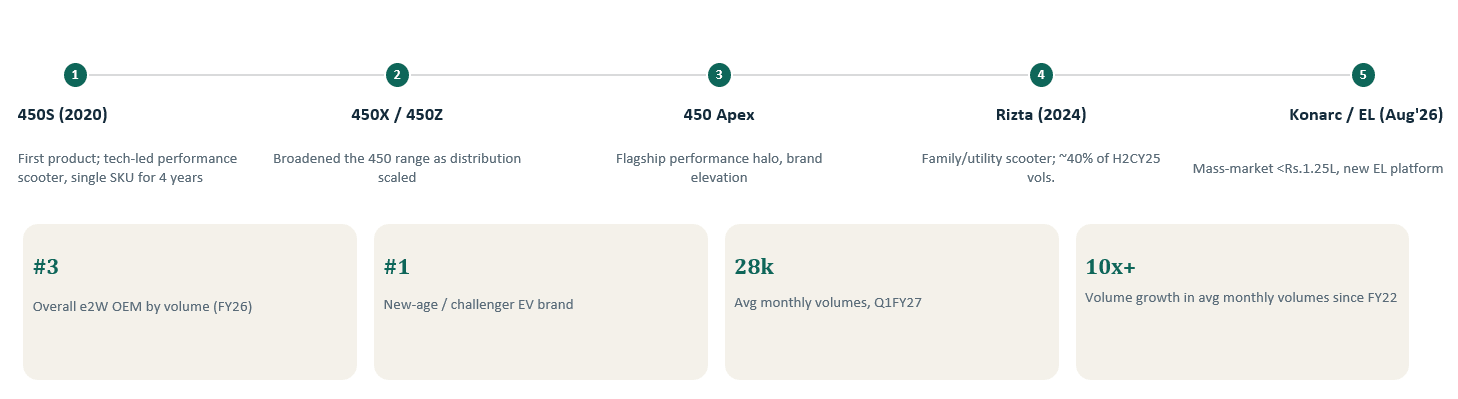
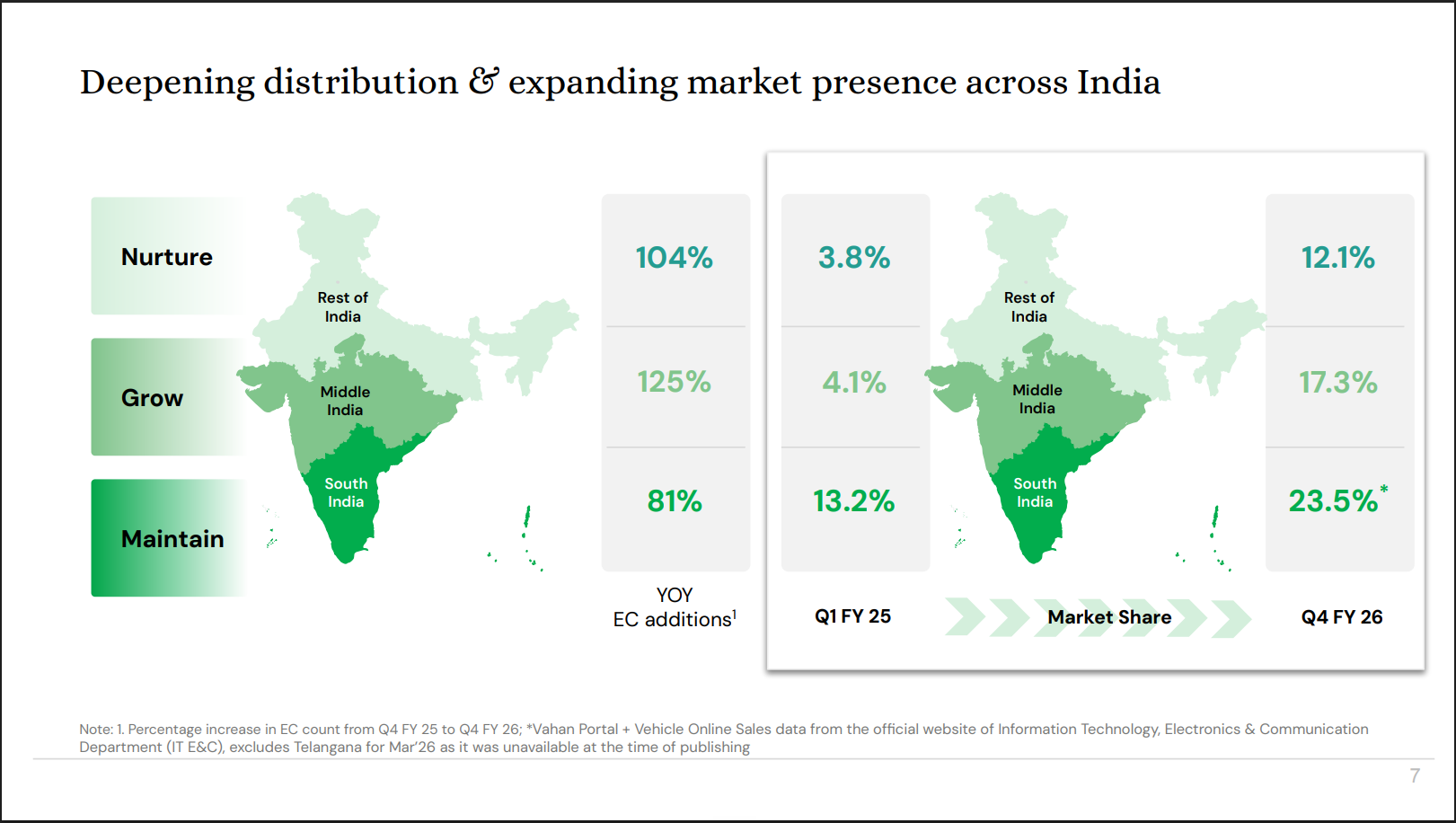
River is running a similar playbook, just with a compressed timelines as market has matured now. Indie, its first product, was built around their core positioning as the “SUV of scooters” at Rs 1.5 lakh, a roughly 29% premium to comparable ICE 125cc scooters; Indie has done what it needed to do, pushing River to #7 spot among e2W OEMs and now attempting multiply stores in 2026 and 2027. Kerala, Karnataka, and Tamil Nadu account for the bulk of River’s current footprint and its fastest-ramping cohorts, while stores in Delhi, Jaipur, and Patna many of which are under 6-12 months old are yet to scale up. In coming years, this South-concertration could soon reduce to half, with the rest spread across the West and North.
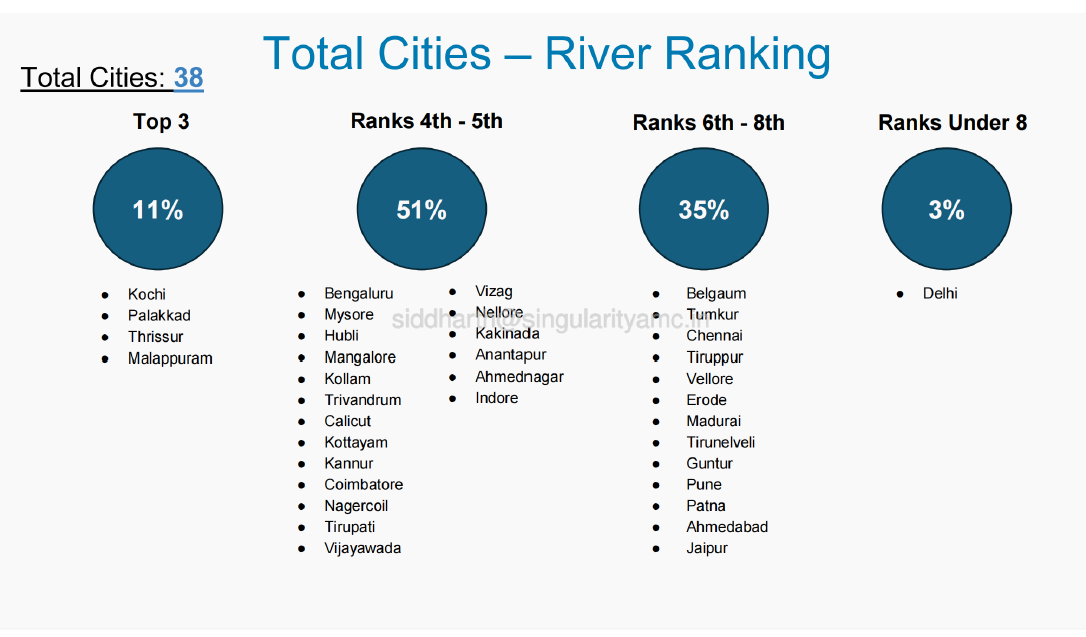
Of the 38 cities where the Indie is currently sold, Kerala stands out as more than just a strong market. It is among River’s highest-penetration markets, with Kochi, Palakkad, Thrissur and Malappuram all ranking in the top three in River’s city-level rankings. The state has India’s highest e-2W penetration at over 19%, helped by its scooter-heavy two-wheeler market and a consumer base shaped by entrepreneurship and service-economy-driven. The Indie’s positioning as a productive asset, rather than simply a lifestyle product, fits particularly well here.
And the dealership story adds another layer to this. Indel Corporation, a Kerala-based automotive distribution group with over two decades of experience and more than ₹2,500 crore in annual turnover, representing brands such as Volvo, Ford and Toyota, approached River rather than the other way around. After evaluating the company and visiting its plant, Indel opened five River stores across Kerala in just ten months and they continue to believe the partnership can be scaled further at a similar pace.
For River, Kerala therefore represents more than a successful market. It is early evidence that a design-first, utility-led electric scooter can win over both highly practical consumers and established distribution partners. That is a template River will now look to replicate across the rest of India.
Frugal Execution
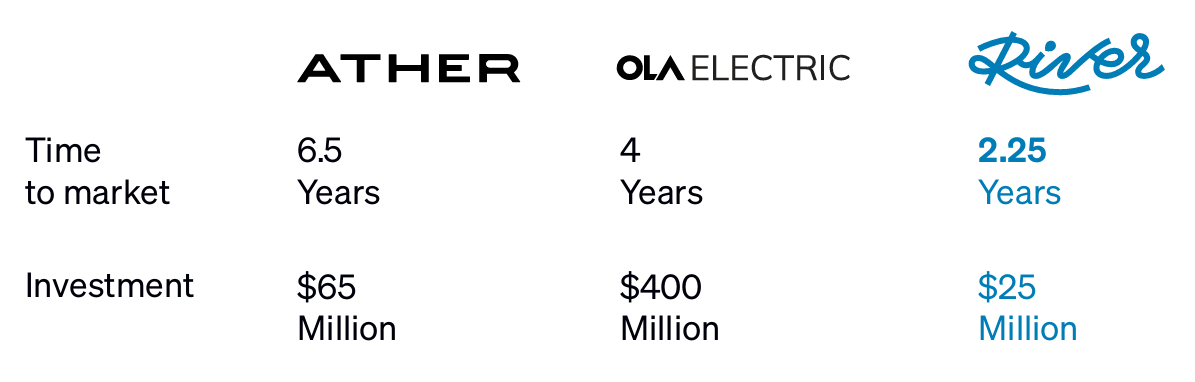
What makes this story particularly interesting from an investor’s ROI lens is what River has achieved relative to the capital it has consumed. Ather Energy, has raised over $500 million across 19 funding rounds since its founding in 2013 till IPO, spending heavily over a decade to build its product, manufacturing infrastructure, software stack, and charging network. River has achieved product-market fit, global design recognition, a Yamaha co-development partnership, and a functional 100,000-unit-capacity factory on approximately $68 million in total funding raised across six rounds. In an industry where capital destruction has been the norm, River’s ability to arrive at this point with so much of its balance sheet intact is itself a form of competitive advantage.
Here is some analysis on how much investment went into the company before they launched their first product:
The Yamaha Stamp
Amongst the most telling validation of River’s product and engineering credentials came not from sales charts but from Japan. In February 2024, Yamaha Motor Co. did a major investment in River’s Series B round, making it one of the largest single-check bets by a global OEM into an Indian EV startup. After a detailed audit of River’s design, R&D, manufacturing processes, and supplier base, Yamaha was sufficiently impressed to go a step further, co-developing the EC-06 electric scooter, fully built by River and intended to be sold through Yamaha’s own dealer network in India, with potential export to select international markets. For a startup that has sold only ~50,000 units in total, being chosen as the manufacturing and engineering partner for one of the world’s most respected two-wheeler brands is an extraordinary outcome.
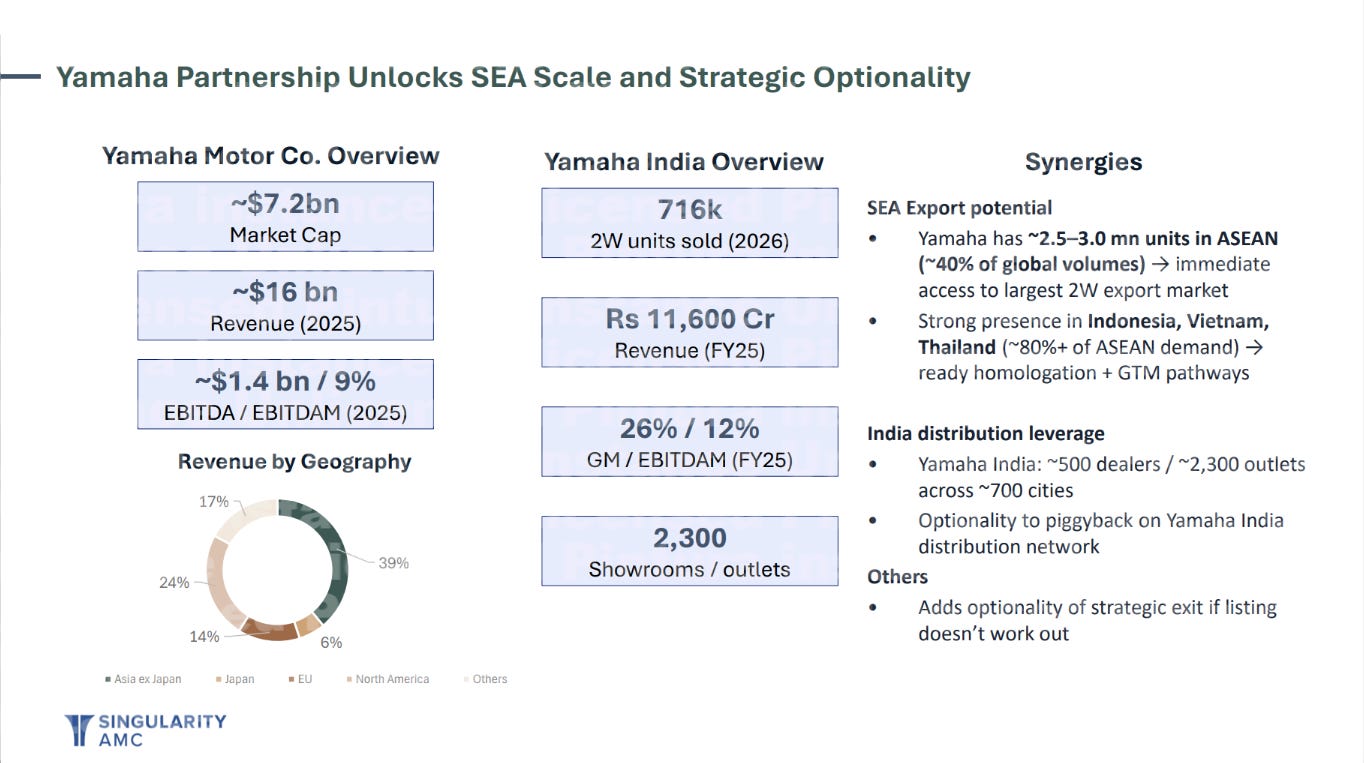
This also shows how River’s technology stack and production quality have passed a bar that most Indian EV startups have not been tested against. This relationship also opens a distribution lever that River has not yet had to rely on, access to a large, trusted dealer network that could materially accelerate its reach beyond the small number of company and partner outlets it currently operates.
The Middle East Opens Its Doors
In June 2023, Al-Futtaim Automotive, one of the Middle East’s largest automotive conglomerates operating across more than 20 countries in the Middle East, Asia, and Africa invested into River. They had evaluated over 50 electric two-wheeler startups before choosing River, impressed by their in-house product development as the deciding factors. River is also the sole Indian investment for Al-Futtaim, making the conviction behind the bet particularly notable.
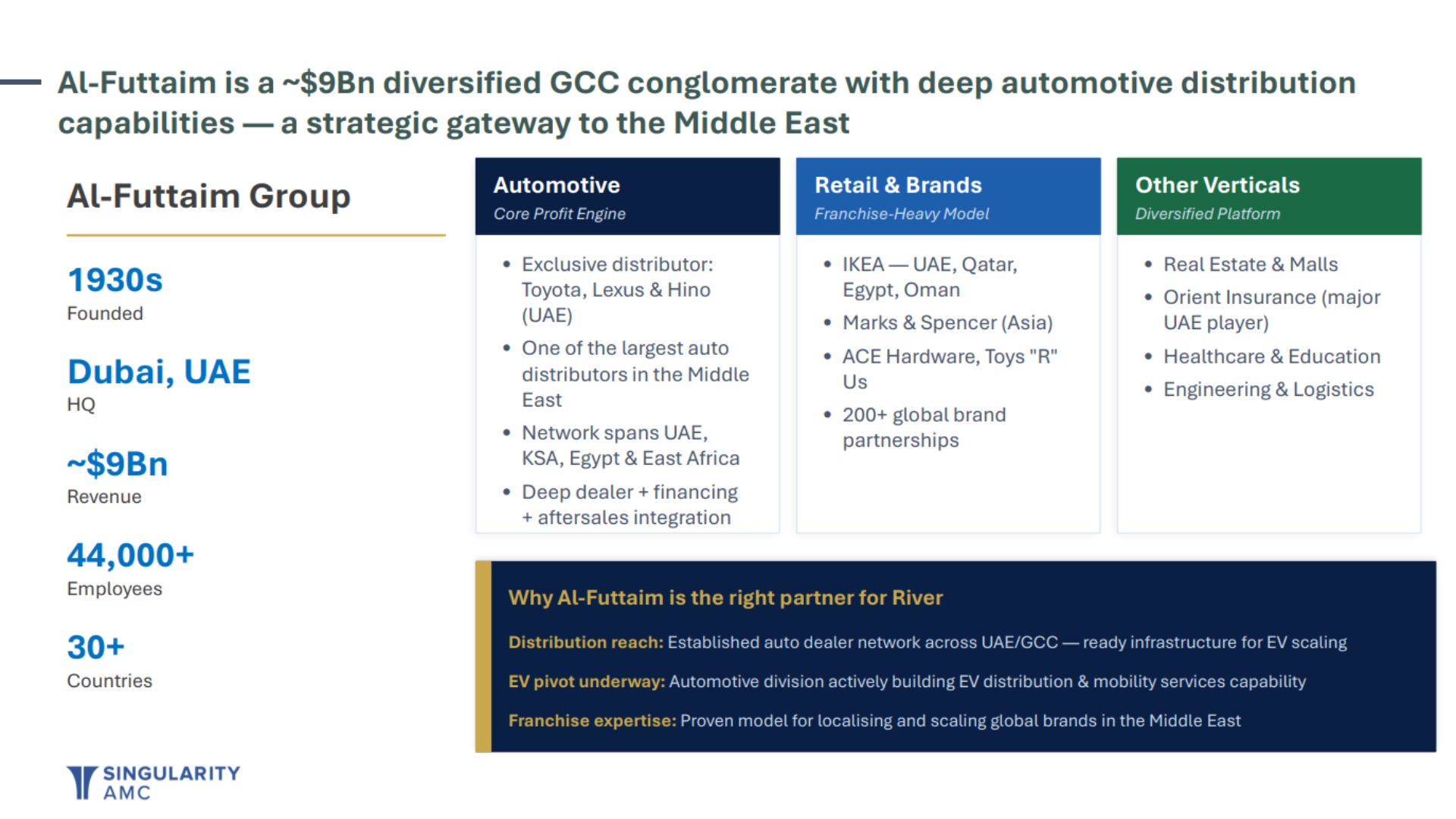
Al-Futtaim’s distribution network across the Gulf and broader emerging markets gives River a potential international pathway that most Indian EV startups have not had access to at this stage of their journey. Al-Futtaim has also launched the region’s first dedicated electric mobility company, positioning itself at the centre of the EV transition across the Middle East, and its investment in River fits directly within that broader strategic agenda.hs, but dips in others, and the market wasn't able to hold above the threshold sustainably. Between 2015 and early 2020, the Chinese government pushed hard via its New Energy Vehicle (NEV) subsidy programme, yet penetration remained consistently below 10%. Most of the volume in this phase came from fleet and policy driven demand, taxis, ride hailing platforms and government procurement, rather than genuine private buyers.
Why This Fits the Singularity Thesis
The real winners will be the ones patiently building moats through product innovation, engineering excellence, software, and intellectual property that compound over decades and that has always been the Singularity lens. We aspire to partner with founders who are strengthening India’s strategic autonomy while creating long-term economic value. As the country’s EV ecosystem matures, we believe businesses that combine deep technology with disciplined execution will be the ones shaping India’s next generation of global manufacturing champions.
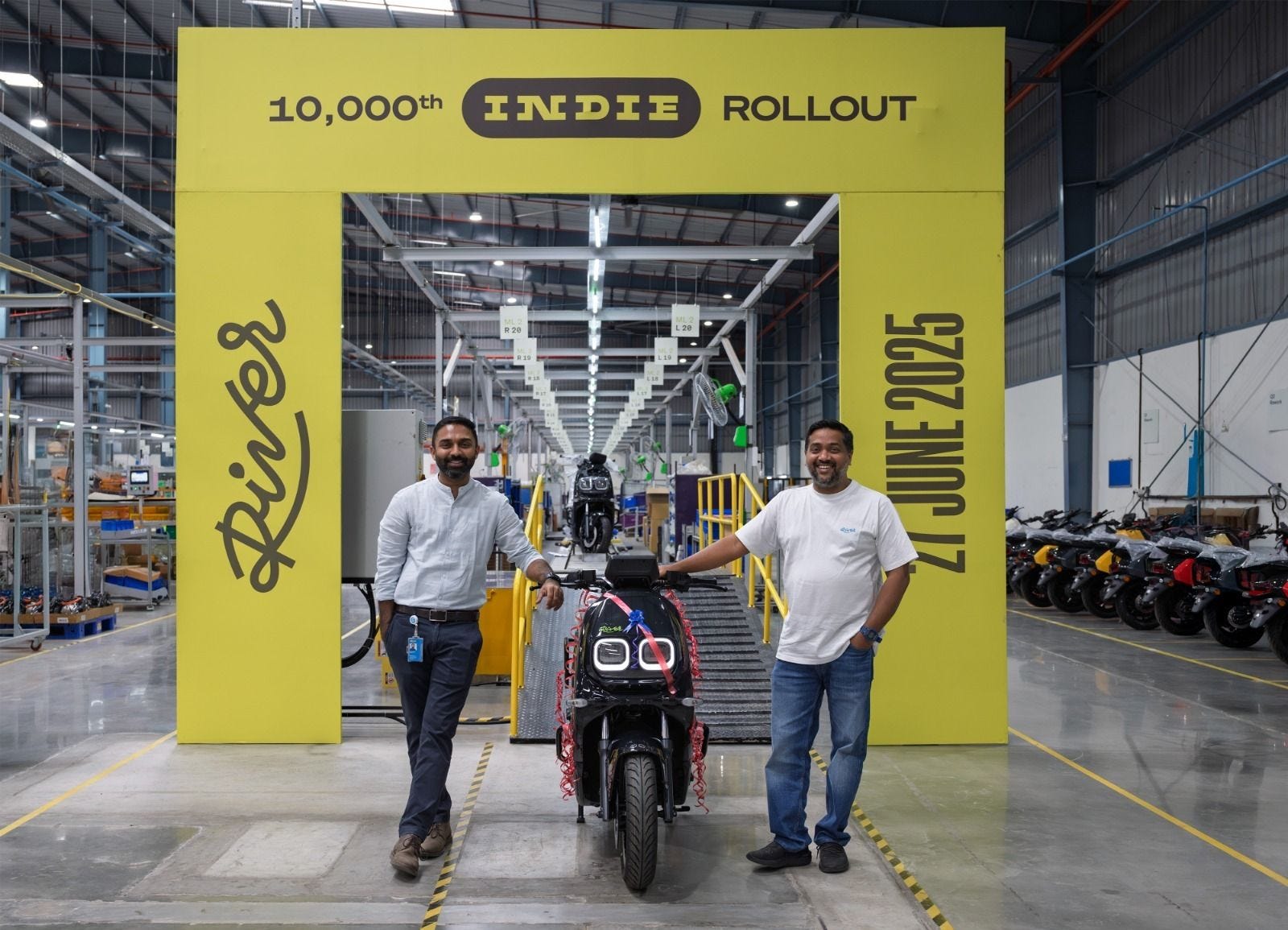
A design-first, vertically integrated EV startup, backed by credible global partners, operating in the world’s largest two-wheeler market at the beginning of a multi-year electrification supercycle. For a fund that invests at the growth stage, this is the kind of asymmetric opportunity that comes around rarely. River is building something worth owning a piece of.
Also read:

The 10% hurdle felt like the real turning point