

India's fitness movement has come a long way over the past decade. It began with the marathon boom, as hundreds of city runs transformed running from a niche hobby into a mainstream pursuit. What started with a few thousand enthusiasts has grown into millions of Indians signing up for marathons every year and crossing the finish line has now become a badge of identity.
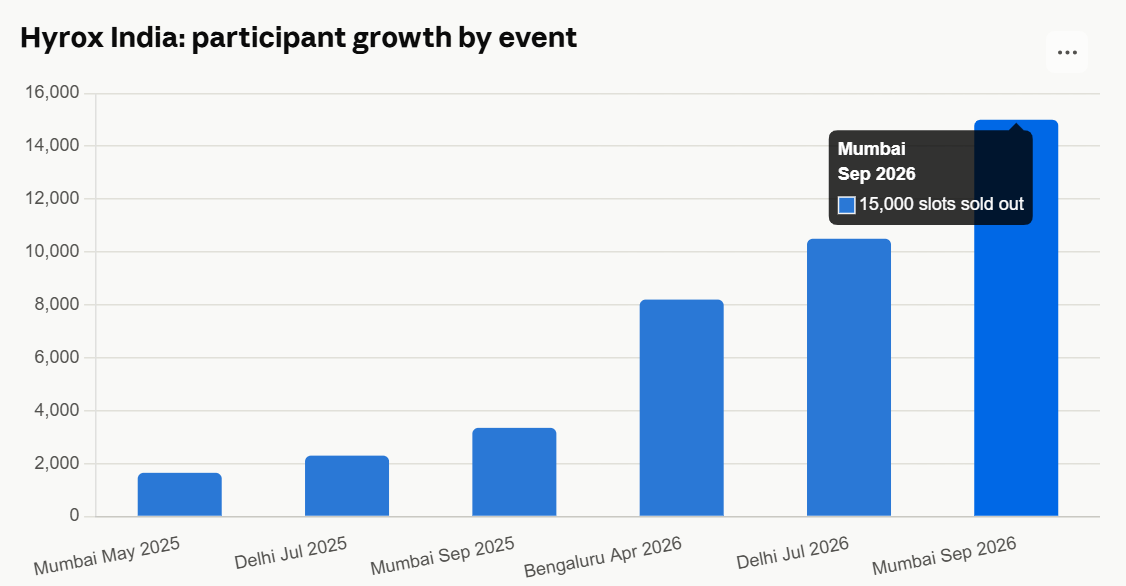
Today, that movement is entering its next chapter. 'HYROX' was an unfamiliar word in India until the start of 2025. Just over a year later, it has become one of the country's fastest-growing fitness phenomena. From 1,650 participants at its Mumbai debut in May 2025, the event drew 10,500 participants in Delhi by July 2026, while the upcoming Mumbai edition sold out all 15,000 slots in just four hours!
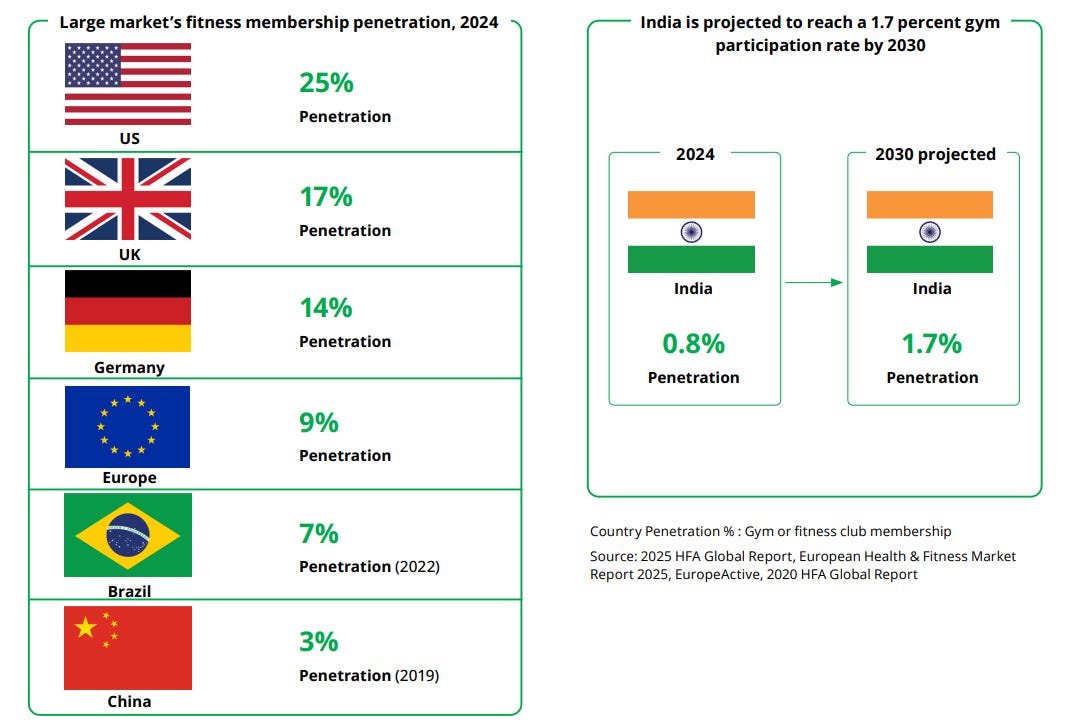
If you think these are strong numbers, what would surprise you that we are in still in early stage of this trend. Overall India’s fitness membership penetration at 0.8% (in 2024) is still in its infancy, well behind other leading economies, such as China (3%) and the US (25%). As disposable incomes rise and preventive healthcare becomes a greater priority, this gap presents a very long runway for the organized fitness industry to expand. And as more Indians embrace fitness as a lifestyle rather than a New Year's resolution, the ripple effects are clearly visible far beyond gyms into categories such as athleisure, nutrition, wellness, and connected fitness.
As movement is becoming a lifestyle, apparel is evolving to move with it. Function and fashion are no longer separate conversations and people are looking for clothing that can keep up with a morning run, a day at work, and an evening out, all without compromising on comfort or style. As more Indians embrace running, strength training, and formats like HYROX, activewear is becoming less about sport and more about everyday living. Women, in particular, are driving big part of this shift, with participation in fitness rising rapidly and creating demand for apparel that traditional wardrobes were never designed to meet. That is where apparel stops being just about fashion and starts being about function. As consumers increasingly demand versatility rather than occasion-specific clothing, functional apparel is steadily moving from a niche category to the mainstream.
By designing for Indian body types instead of just adapting global templates, and by building a community rather than relying on traditional advertising, it builds trust that naturally extends from activewear into everyday comfort wear.
Enter Blissclub!
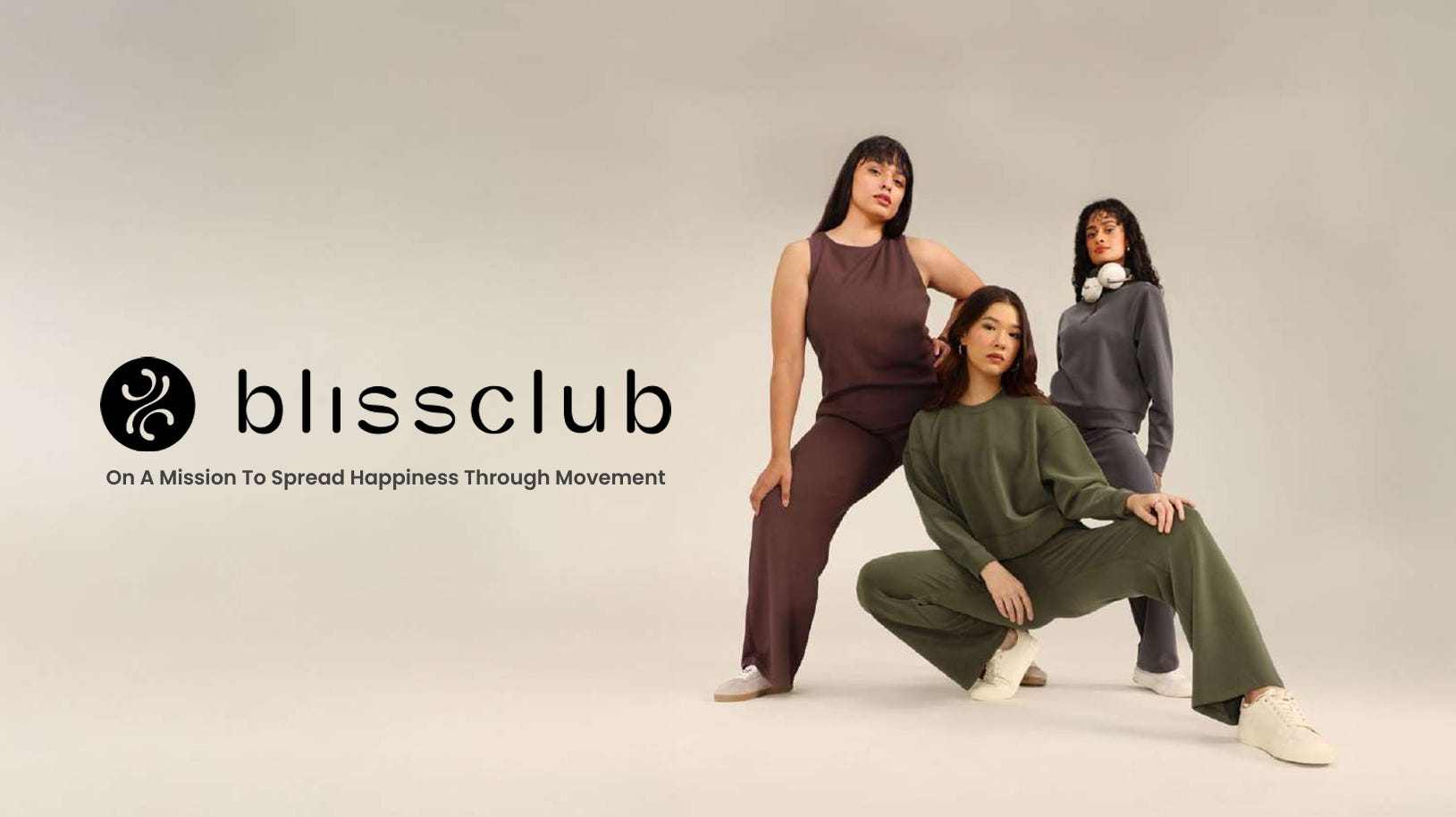
Community That Built The Product
In the early months of 2020, during lockdown, Minu Margeret (Founder & CEO) began running online yoga sessions and a 21-day movement challenge on Instagram, building an audience of women before a single legging existed. That June, she partnered with ISB to attempt a Limca Book of Records entry for the largest online yoga class for women, a milestone built entirely around community, months ahead of any commercial launch.
That audience which gathered around was never just an audience, but became an extended product team. Minu often spoke about how the community shaped key decisions even before the first products were designed. Women shared what they struggled to find in existing activewear, whether it was the right price point, better sizing, or simple functional details that brands had overlooked. Pockets in every legging, something surprisingly rare in Indian activewear at the time, came directly from those conversations. So did a sizing philosophy built around real Indian body types instead of imported Western size charts.
What started as a small WhatsApp group grew into a large community of Instagram followers before Blissclub became a mainstream commercial success. More important is that community created a flywheel where customers help shape a product, hence they actually do not need to be convinced to buy it. They trust it, recommend it to friends, and keep coming back.
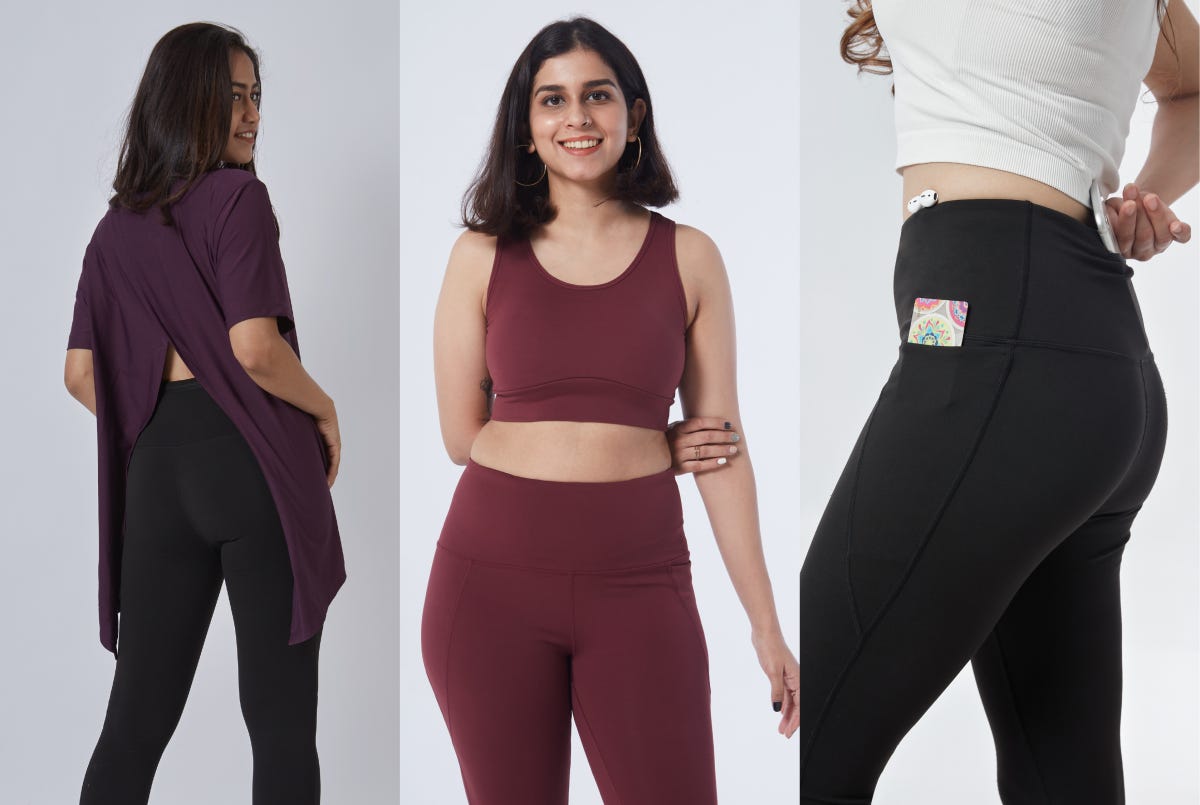
And while focusing on women, Blissclub also positioned it as a size-blind by design, building for every body as a baseline expectation rather than a marketing angle. That is a functional claim and is also the reason why the community-first framing has held up as the brand has scaled rather than fading into the background the way most brand origin stories do.
Comfort, Engineered
Athleisure's promise is that a single garment can move between the gym and the rest of the day, which rarely holds true. Fabric built for a workout often feels wrong the moment you step outside one, too clingy, too synthetic, too obviously gymwear. Closing that gap is a fabric-engineering problem before it is a fashion one, and it shows up as an entire platform rather than a single hero product.
Blissclub’s fabric platform spans PetalRib, RibSupreme, BareButter, AirMelt, and CloudSoft, among others, which together solve for different comfort problems individually, including temperature, texture, stretch, structure, and travel-durability, rather than being five variations on the same idea. For example, CloudSoft goes after the harder problem in performance fabric, delivering the functional benefits of synthetic material with the handfeel of cotton, built with 25% spandex for what the brand positions as the highest stretch available in the Indian market.
Most Indian activewear brands stop at a standard S to XL range, treating everything outside it as an edge case. Here, size runs from XS to 4XL, and edge sizes, the ones most brands don't bother stocking, account for majority % of sales, which suggests the range isn't a checkbox for inclusivity but also where a meaningful share of real demand actually sits. Length too, is engineered the same way. Where most brands offer a single length and expect every body to adjust to it, their range is built for both regular and tall fits, and tall sizing accounts for meaningful of sales, a segment a one-length approach simply cannot serve.
Instead of a one-time design that ships and stays static, garments move through continuous iteration, refined on real fit and wear data with every release rather than treated as finished the day they launch.
From Activewear to Everyday Wear
Every successful brand eventually faces the same question: how do you grow beyond the product that made you successful? If you expand too quickly, you risk losing your core identity. Blissclub instead has decided to stick to its original promise of comfort and functionality, it has simply applied that philosophy to more occasions in a woman's wardrobe. What began with a single pair of leggings in activewear has grown into citywear, all-day wear, innerwear, swimwear, and travel wear. Today, the brand offers over 150 products, has served more than one million customers, and operates 17 stores across seven cities.
Blissclub’s moat wasn’t built on breadth, it was built on fit. By concentrating on bottom-wear, a category with some of the highest fit sensitivity in apparel, the brand created a natural flywheel of repeat purchases. Once a customer finds a pair of leggings that works, the cost of experimenting with another brand becomes disproportionately high, and that raises switching costs in a way few other apparel categories can match. A customer who trusts the fit of one pair is far more likely to buy her next pair from the same brand than gamble on an unfamiliar fit again, and that dynamic compounds over time. It’s also visible in how the brand talks about lowering attrition risk within the category it knows best, rather than spreading thin across everything at once.
Once that loyalist base was locked in, the brand used it as the foundation to widen the market rather than deepen it further. Products like the Ultimate Leggings Lite, engineered for the same seamless fit and invisible-pocket design as the flagship line but at a lower price point, and an entire “Under 999” collection sitting well below the brand’s usual Rs 1,999 to 2,999 range, brought Blissclub within reach of a buyer who couldn’t previously justify the entry price. The goal wasn’t to compete on discount. It was to get fit-tested customers into the funnel at a lower price, then upsell them once they'd experienced the fit themselves.
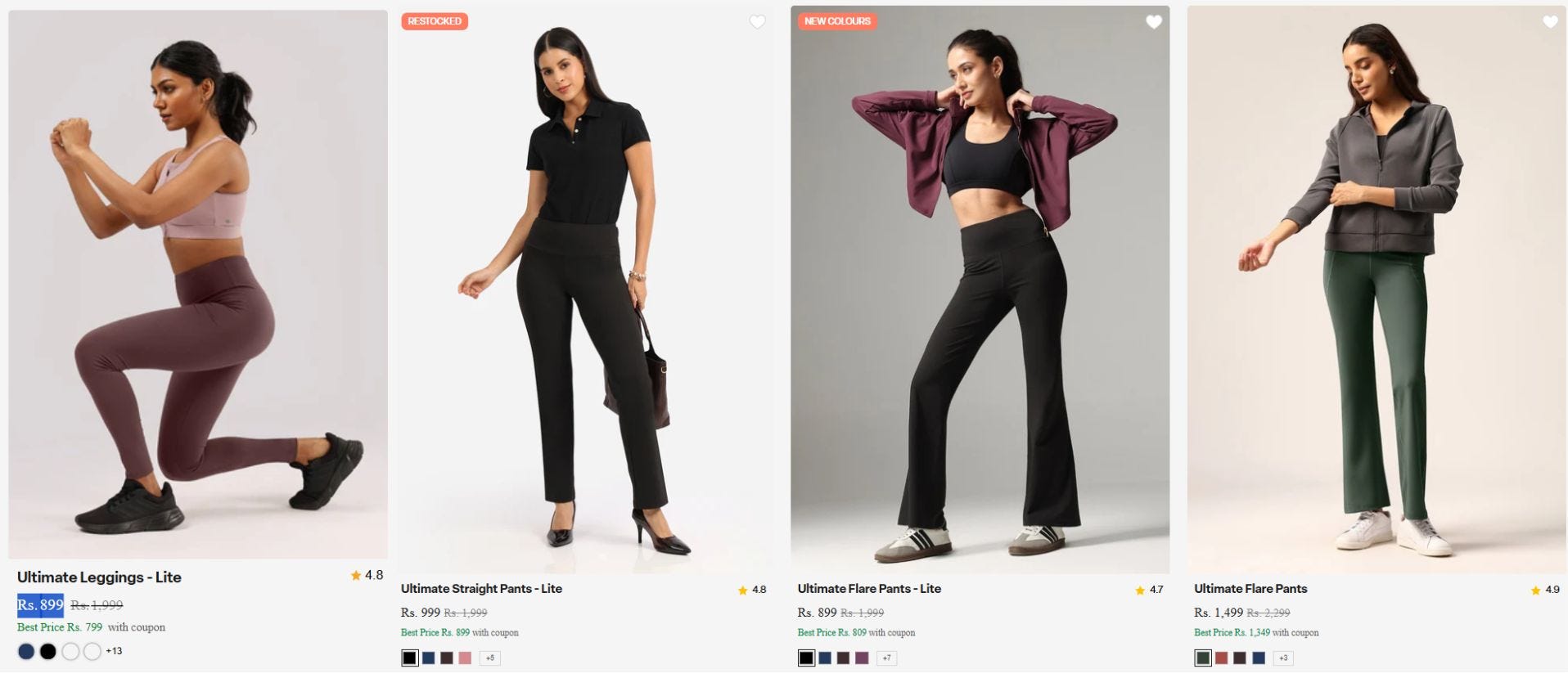
A conventional gym legging is built for one hour: the workout itself. Everything before and after that hour is dead time for the garment, a change of clothes waiting to happen. What Blissclub's fabric and fit engineering actually does is stretch that same hour of utility into something closer to fourteen, the same pair of leggings carrying a woman from an early workout, through a full workday, into errands, and out for the evening, without a single wardrobe change forced by comfort or appropriateness. It is effectively lower cost per hour worn, even at a price point that looks premium against a single-use gym legging.
When it comes to products for men, a relatively recent bet for the company, Blissclub is using its existing customer base to introduce the brand to a new audience, a sensible way to test whether the same comfort-first engineering that resonated with women can work just as well for men. More importantly, the company is solving a genuine problem rather than simply extending its product line. For example, denim has been the default choice in Indian men's wardrobes for decades despite the country's hot and humid climate. Blissclub's Legendary Collection instead offers lightweight trousers in three length options, designed for men who are 5'6", 5'9", and 6 feet tall, applying the same height-based fit philosophy that helped differentiate its women's line.
That said, the collection is only months old, and the harder test is still ahead: whether Blissclub can position itself as a "male-also" brand without diluting what made the women's brand work. The fundamentals being applied are sound, but men's wardrobe behaviour and purchase decisions don't map cleanly onto women's. Let’s see if this optionality works out well.
Singularity’s Role
The funding round comes at a point where the company has demonstrated remarkable growth. For a business that has already proven it can grow efficiently online, now being asked to prove it can do the same offline.
The fresh capital is aimed at accelerating Blissclub’s offline retail expansion while strengthening its omnichannel capabilities. Having built a strong digital-first brand with deep customer trust, the company is now entering the next phase of its growth journey, extending that experience into physical retail. Scaling an offline footprint requires thoughtful execution across store locations, inventory planning, merchandising, and store operations, while seamlessly integrating the online and offline customer journeys. As the offline footprint expands and store-level economics strengthen, the company is well positioned to unlock a significantly larger addressable market. In many ways, this is precisely where growth capital can be most catalytic: enabling a proven digital brand to build a high-quality offline presence that compounds customer acquisition, engagement, and lifetime value.
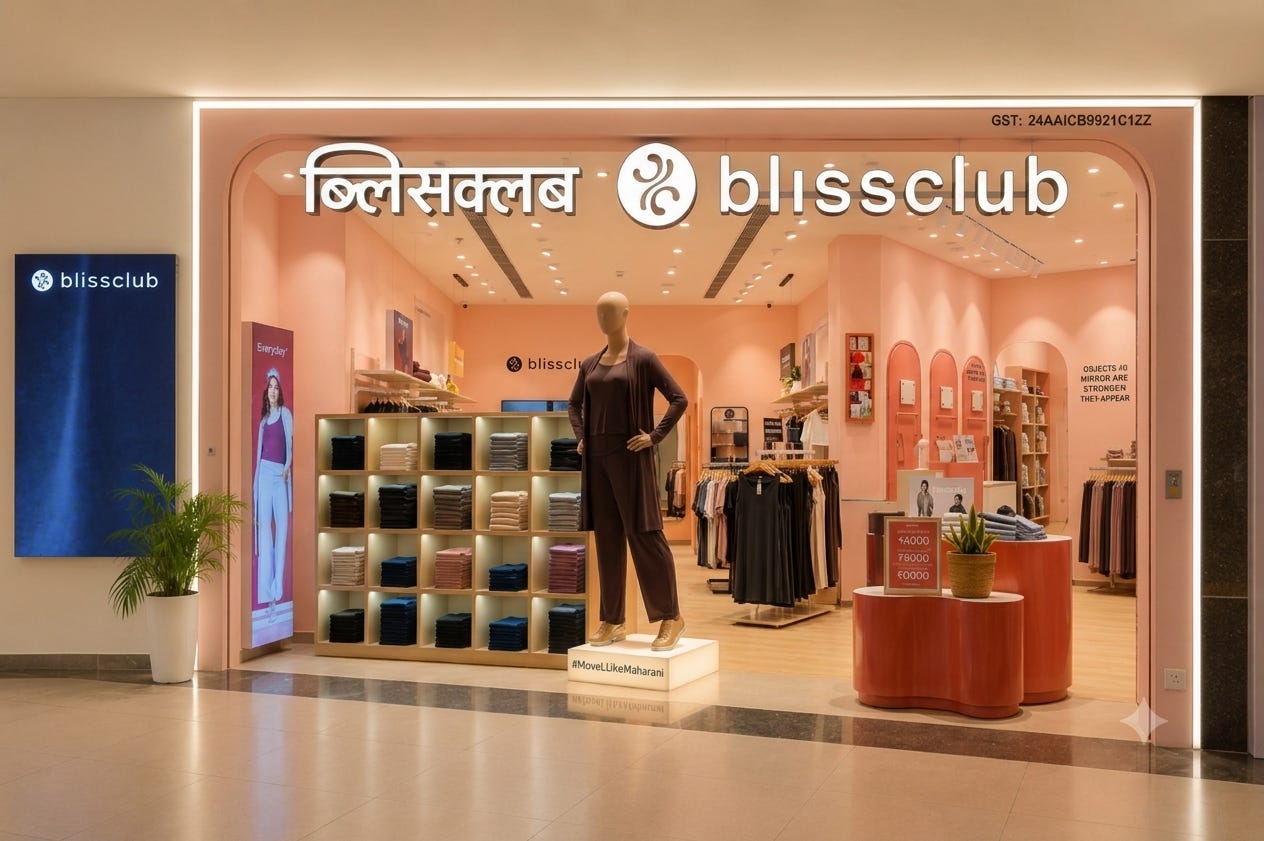
Having established a strong foundation, Blissclub is now well positioned to scale its offline and online presence, deepen customer engagement, and strengthen its leadership in the category. We believe the company is entering an exciting phase of growth and look forward to supporting the team as they build one of India's most enduring consumer brands.
Read out recent posts:
Next Frontier in India's Cancer Care

How Singularity Portco Immuneel is Advancing CAR-T therapy in India....
Not Just Another EV Story

How Electrifying Public Fleets is Disrupting India’s Traditional Bus Duopoly...